Breaking barriers in Mozambique: How women are retraining in roles that are traditionally male-dominated
Women in Mozqmbique are breaking down barriers by retraining in roles that are traditionally male-dominated and more climate resilient.
Mozambique is among the countries most severely affected by the global climate crisis. It’s regularly exposed to droughts, floods and cyclones, which are increasing in frequency and magnitude.
Climate-impacted weather patterns have led to widespread displacement and loss of land and livestock. With 80% of the population relying on farming to survive, this is exacerbating existing humanitarian crises.
Our partner, Alberto Cassimo Institute of Vocational Training and Labour Studies (IFPELAC), have been supporting women who have been displaced to access training for new livelihoods beyond the agricultural sector. Women have been retraining in roles that are traditionally male-dominated and more climate-resilient.
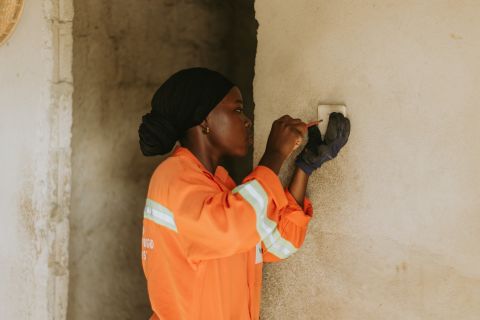
Bincha, who has been impacted by successive cyclones in northern Mozambique, decided to train as an electrician in 2023.
Bincha is one of many women who have benefited from training in traditionally male-dominated fields, inspiring a change in attitudes around traditional gender roles. There is a strong sense of local pride in the achievements of girls and young women who are reducing gender stigma in traditionally male areas of work. Bincha said “often people say ‘wow a woman going up’ or ‘look, a woman electrician’. People praise me a lot. It gives me strength and motivates me”. She adds ‘training can help girls who have been displaced in many ways…some young women have said ‘I want to be like that’”.
She is now financially independent, earning her own money and supporting her family. “Making my own money, I feel like a big deal. I feel like I can do everything by myself.”
Through training provided by IFPELAC, over 800 women like Bincha have retrained in vocations such as plumbing, construction and metalwork. The new skills learnt not only provide income but also create new opportunities and future security for communities once reliant on farming.
Page updated 1 September 2026