Emergencies, disasters and our humanitarian response
ActionAid’s work in emergencies in 2025
More than
3,236,264
people reached who were affected by conflict, natural disasters or other crises
Grants of
£7.9 million
for humanitarian support in 24 countries around the world
Partnered with
6
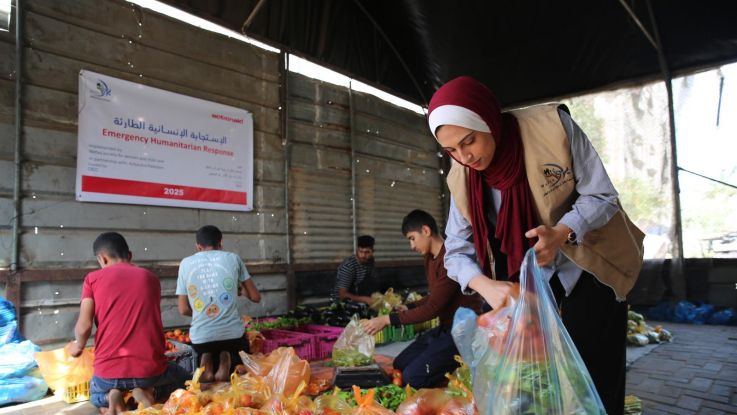
local organisations across Gaza and Lebanon to delivery humanitarian assistance
ActionAid’s recent emergency work
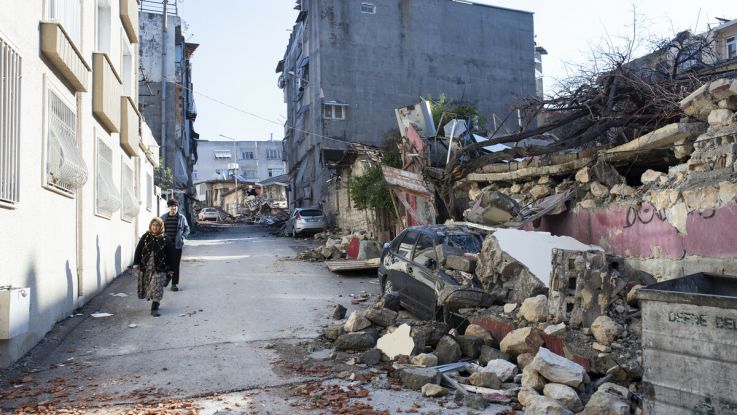
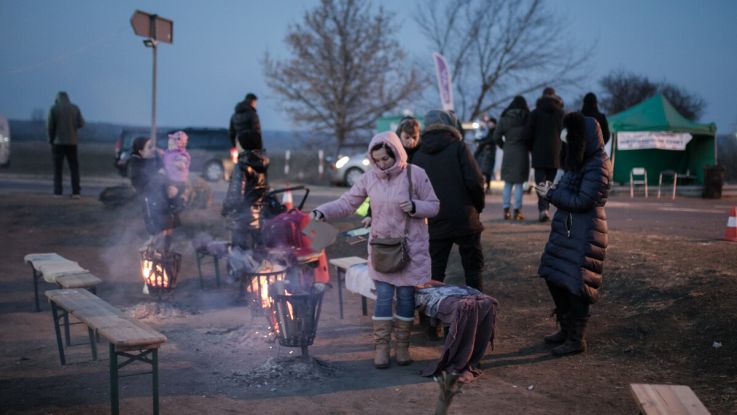
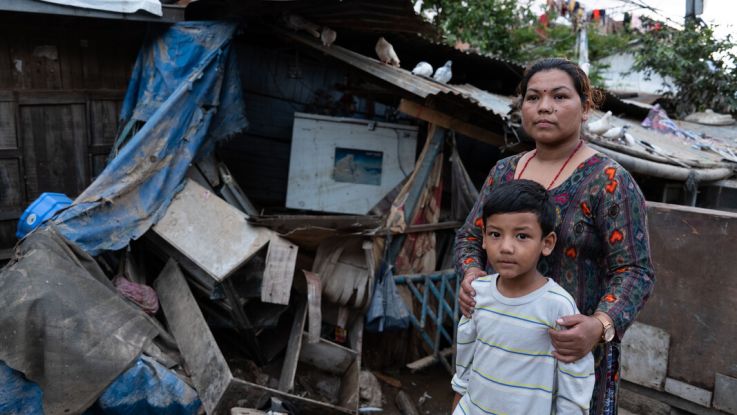
What are humanitarian crises or humanitarian emergencies?
Humanitarian crises refers to an event or set of events that threaten the health, safety and livelihoods of a large number of people.1
What are the different types of humanitarian crises?
Humanitarian crises can be divided into the following:
- Man-made emergencies such as conflict and industrial accidents.
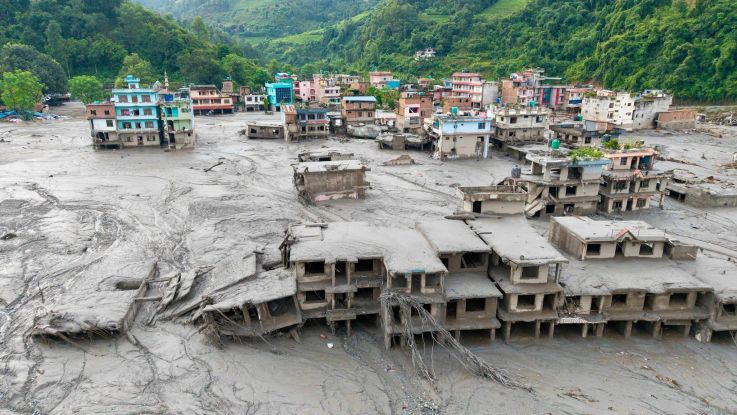
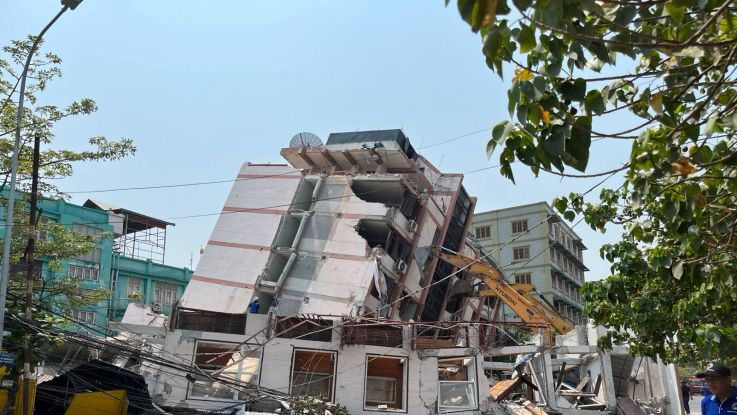
- Disasters such as tsunamis, earthquakes, floods, droughts, cyclones, hurricanes and even health-related epidemics.
- Complex emergencies which are a combination of both natural hazards and man-made emergencies such as food insecurity and displacement of people.
Women's and girls’ rights in emergencies
Ensuring that we work with women means that we do not overlook needs or vulnerabilities that are specific to women and girls in emergencies. We provide women-only safe spaces, where women and girls can access education and training, often for the first time in their lives. They learn to read, gain new skills and start to recognise their own potential.
In these safe spaces, women and girls receive emotional support for any trauma they have experienced. They can also access medical referrals for cases of rape and other forms of violence.
Rapid response and recovery led by women
We know from our emergency response work, for example in Bangladesh, the Democratic Republic of Congo, Haiti, Indonesia, Kenya, Malawi, Nepal and Somaliland, that women bring vital skills, resources and experience to humanitarian response.
Women’s participation in decision-making is not only a fundamental human right. It has been proven to contribute to better disaster preparedness and risk reduction, as well as peace building and conflict resolution in communities.2

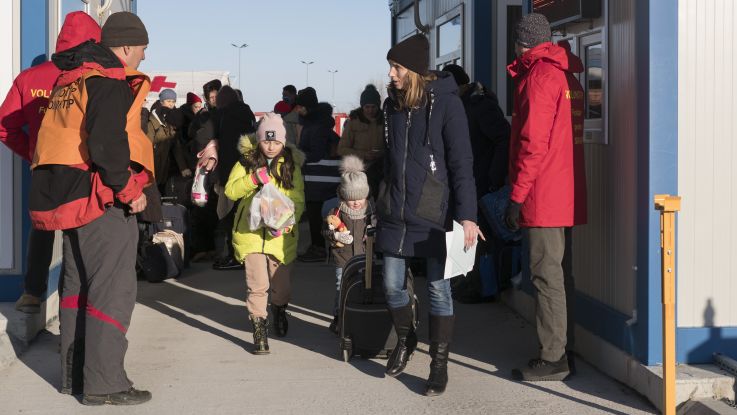
Working with local partners in Ukraine
2025 marked the final phase of a £15 million DEC-funded programme supporting conflict-affected communities in Ukraine, Poland and Romania.
During the three-year response, we worked in partnership with over 30 organisations across the region.
Yulia, an education and ecosystem officer of ActionAid Ukraine, has been part of this humanitarian assistance delivery.
I think it's very important to understand our own power and to understand that by working together, by empowering each other, we are in solidarity with different struggles, understanding each other and fighting for something similar."
Anastasia Vlasova
Anastasia Vlasova
Our long-term support in the wake of a disaster
In the months and years following an emergency, we work with local women to give them the support they need to face the future with renewed hope. This could be helping raise houses above floods levels, assisting them to get back to work with loans, or providing them with farmyard animals or means of transportation.
We endeavour to listen to what women and girls really need to rebuild their lives after an emergency. In Sierra Leone, our commitment to long-term support means we continue to work with grieving communities who were affected by the Ebola crisis, to help them recover from the physical, psychological and financial losses caused by the outbreak.
In areas that face high numbers of natural hazards, we train women to respond to the next disaster when it hits.
For example, in Nepal, ActionAid teaches schoolchildren skills to protect themselves when earthquakes strike.
In Bangladesh, we train women to lead people to shelters during cyclones. The results are astonishing: Cyclone Mahasen killed 17 people in Bangladesh in 2013, compared to 3,500 deaths as a result of Cyclone Sidr in 2007.
Page updated 1 September 2026