Period poverty and period justice - FAQs
Periods and menstrual health are a key part of life and sexual and reproductive health. Yet women, girls and people who menstruate can face barriers that make managing their periods difficult, unsafe or undignified.
The challenges go far beyond access to period products. Lack of safe water, sanitation and medical care can affect health, while shame, secrecy and discrimination can limit people’s freedom and participation in everyday life. For many, these barriers can affect education, work and livelihoods.
This is why ActionAid works to advance period justice. We work alongside women's rights organisations, women, girls and people who menstruate to challenge the inequalities that prevent people from managing their periods safely, confidently and with dignity.
Here, we answer some of the most frequently asked questions about periods, period poverty, menstrual health and our approach to period justice.
Questions about periods
What is menstrual health and why is it important?
Menstrual health is vital to ensure people who menstruate can manage their periods safely and with dignity, in a way that allows them to participate fully in daily life and activities. It includes access to period products, health information and safe spaces, as well as to water, sanitation, hygiene and waste management facilities. Menstrual health is a human right, and a vital component of sexual and reproductive health.
Questions about period poverty
What is period poverty?
Period poverty is the lack of ability to buy or access to resources like menstrual products, health information, washing facilities and private spaces to manage menstrual health. Period poverty can affect health, education, wellbeing and opportunities throughout life. Read more about period poverty.
What is period justice?
Period justice goes beyond meeting the immediate needs of period poverty, and sets out a framework to end the systemic inequalities experienced by people who menstruate, that prevent them from accessing the products, information, facilities, healthcare and support they need.
How much can periods possibly cost?
The true cost of menstruation goes far beyond the price of a single pack of pads.
Periods are expensive. It is estimated that the average lifetime cost of having a period is £4,800 in the UK.
Menstrual products are a recurring monthly expense, and for those living in poverty, even small costs add up and can be unaffordable over time.
In many contexts, period products are not subsidised or provided free, and price fluctuations or supply issues can make them even less accessible for poorer or marginalised communities.
Managing periods also requires access to clean water, private and safe sanitation facilities, pain relief, and sometimes additional clothing or underwear.
Period inequality reflects deeper issues of economic injustice, underfunded public services, and structural patriarchy, not just the cost of products. It reflects the broader systemic inequalities that prioritise profit over people, the same structures that created the wealth gap between Global North and South, that underfund public services in impoverished communities, and that treat menstruation as shameful.
How do periods affect education?
Menstrual inequity and period stigma continue to undermine the rights, education, health, and future opportunities of girls and women around the world. When people cannot reliably access the menstrual products, safe facilities, information, and support they need to manage their periods with dignity, their participation in education and community life can be restricted.
Many girls and young people miss school during their periods because they lack access to appropriate menstrual products, fear stigma or discrimination, or experience discomfort and anxiety about leaks. These challenges are often compounded by inadequate water, sanitation, and hygiene facilities, including a lack of safe, private toilets and handwashing facilities.
Menstruation should never be a barrier to education, participation or wellbeing. Achieving menstrual equity requires addressing both material needs, such as access to products and facilities, and the social and cultural systems that prevent people from managing their periods safely, confidently, and with dignity.
How does ActionAid work to advance period justice?
ActionAid works to advance period justice by addressing the barriers that prevent women, girls, and all people who menstruate from managing their periods safely, confidently and with dignity.
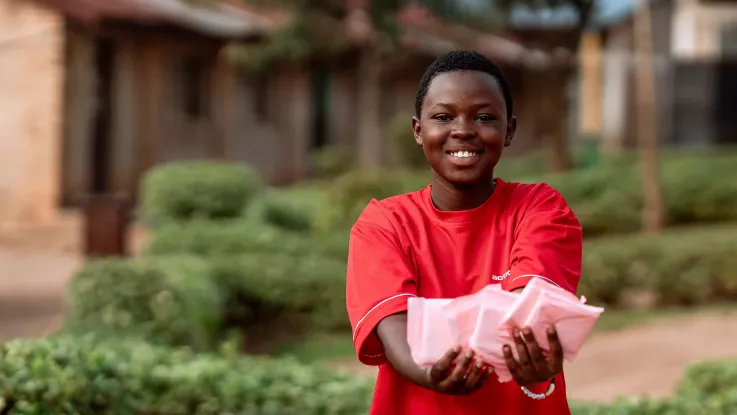
We support communities with training to make reusable menstrual products, helping to increase access to affordable, sustainable menstrual care and reduce reliance on products that may be inaccessible or expensive.
Through girls' clubs, safe spaces, and community programmes, we provide comprehensive information on menstruation, sexual and reproductive health, and bodily autonomy. By challenging stigma and promoting knowledge, we help create environments where menstruation can be discussed openly and without shame.
In humanitarian emergencies, we distribute dignity kits that include menstrual products, soap, underwear and other essential items. We also advocate for the inclusion of menstrual health in emergency responses, recognising that access to menstrual products, sanitation facilities, clean water, and information is fundamental to health, dignity and wellbeing.
Our approach to period justice goes beyond products alone. We work to tackle the social, economic and structural inequalities that drive menstrual inequity, so that everyone can manage their periods with dignity and fully participate in education, work, and public life.
Why not put poor people on birth control like the contraceptive pill?
Periods are not a problem – how society deals with them is. Putting women and girls on birth control or the contraceptive pill as a blanket solution to period-related challenges is not the answer.
Bodily autonomy and rights: Everyone should have the right to make their own choices about their bodies and health. Imposing birth control as a solution undermines their right to make informed decisions about their bodies and health.
Not a one-size-fits-all solution: Birth control pills are not suitable or desirable for everyone. They can have side effects, may not align with individuals’ health needs, cultural beliefs, or personal preferences, and should not be used as a substitute for comprehensive menstrual health support.
Structural issues: The real problems are things like not having affordable products, clean bathrooms, or enough education about periods—not just the fact that periods happen. Addressing these requires investment in public services, education, and infrastructure, not just medical interventions.
Stigma and discrimination: Treating periods as something to be “fixed” with medication can reinforce stigma and discrimination, rather than addressing the underlying issues of dignity, access, and rights.
For decades, adolescent girls and women have been advocating to be involved in designing their own solutions, rather than having external interventions imposed upon them. This means investing in public services, menstrual education, and affordable products, and tackling the stigma and structural issues.
Period justice is not a single-issue fix, it’s a long-term commitment to dismantling inequality.
How are we helping those suffering from period poverty in the UK?
We recognise that menstrual inequity affects people in every part of the world, including the UK, and that many organisations are doing vital work to support those experiencing period poverty and inequity in their communities.
ActionAid's focus is international. We work alongside women, girls, and communities across Africa, Asia, and Latin America who face some of the greatest barriers to health, education, safety, and economic opportunity.
Our approach is grounded in period justice, recognising that menstrual equity is about more than access to products alone. It is also about challenging stigma, advancing gender equality, and ensuring that everyone who menstruates has access to the information, facilities, resources and support they need to manage their periods with dignity.
Each year, we reach more than 15 million people through programmes that support women's rights, education, livelihoods, humanitarian response and gender justice, helping to address the structural inequalities that drive menstrual inequity and exclusion.
Questions about periods in humanitarian emergencies
Why are menstrual products important in humanitarian emergencies?
Menstruation does not stop during conflict, displacement, or disasters. Even in the most challenging circumstances, women, girls, and all people who menstruate need the resources, facilities, and support to manage their periods safely, comfortably, and with dignity.
During humanitarian crises, people are often forced to flee their homes, leaving behind essential belongings and support networks. When people are displaced to refugee camps, and emergency shelters, access to menstrual products, private sanitation facilities, clean water, and accurate information can be limited or unavailable. Financial hardship can further restrict people's ability to obtain the menstrual supplies they need.
From a period justice perspective, menstrual health and hygiene are not optional extras. They are fundamental to health, dignity, safety, and human rights. During humanitarian emergencies people experiencing these crises consistently identify menstrual products as priority needs. Supporting menstrual equity in emergency settings means ensuring access not only to products, but also to safe and private sanitation facilities, clean water, information, which allow people to manage menstruation without shame or discrimination.
What do people in crises use when they don’t have menstrual products?
In humanitarian emergencies, people who menstruate often face significant barriers to accessing the menstrual products, facilities, and resources they need. When menstrual supplies are unavailable or unaffordable individuals may be forced to rely on improvised materials to manage their periods, including
pieces of cloth, paper, mattresses and blankets,. In situations where menstrual products are scarce, some people may also be compelled to use products for longer than intended or reuse materials without adequate access to clean water, sanitation, or washing facilities.
No one should have to manage their period without the resources and support needed to do so safely and with dignity. Limited access to menstrual products, clean water, private toilets, and hygiene facilities can affect physical comfort, emotional wellbeing, safety, and participation in daily life during a crisis.
Period justice recognises that menstrual health is an essential part of humanitarian response. Ensuring access to menstrual products, safe sanitation facilities, clean water and accurate information helps uphold the rights, dignity and wellbeing of women, girls and all people who menstruate, even in the most challenging circumstances.
Questions about periods, sustainability and the environment
Why does ActionAid support reusable menstrual products?
ActionAid supports menstrual choice and menstrual equity by helping ensure that women, girls and all people who menstruate have access to safe, affordable, and sustainable options for managing their periods with dignity.
In many communities where we work, reusable menstrual products can be a practical and cost-effective solution, particularly where disposable products are expensive, difficult to access or unavailable. We support this by providing sewing machines, materials and training that enable communities to make reusable menstrual products.
This approach helps expand access to menstrual care while building skills and supporting local livelihoods. In some communities, women can generate additional income through the production of reusable menstrual products, while ensuring that girls and others who menstruate can access the products they need.
By supporting access to reusable menstrual products alongside menstrual health education and efforts to challenge stigma, we work to advance menstrual equity and uphold the dignity, health and rights of people who menstruate.
Why won't ActionAid simply provide menstrual cups or period underwear?
At ActionAid, we are working to ensure period justice, which means supporting menstrual choice, dignity and equity rather than promoting a single solution for everyone.
Menstrual cups and period underwear can be effective, sustainable options for some people who menstruate. For example, ActionAid has supported initiatives in Malawi that increase access to menstrual cups for people who may not be able to afford other menstrual products. Menstrual cups can last for many years, reducing both long-term costs and environmental impact. However, they may not always be the preferred or most appropriate option. In some contexts, there may be limited awareness or understanding of menstrual cups, cultural or social barriers to their use, or concerns about inserting products into the body. Access to clean water, private washing facilities, and accurate information can also affect whether menstrual cups are a practical choice.
Similarly, while period underwear may work well in some settings, availability and affordability can be significant barriers. Their use also depends on access to sufficient water, soap, and private washing and drying facilities, which may be limited in some communities or during humanitarian emergencies.
At ActionAid we recognise that there is no one-size-fits-all solution. We work closely with communities and centre the voices and experiences of local women, girls, and people who menstruate when designing our programmes.
Our goal is to expand access to a range of safe, affordable, and appropriate menstrual products and ensure that everyone can make informed choices about how they manage their periods. Alongside improving access to products, we work to challenge stigma and support access to the facilities, information and resources needed to manage menstruation with dignity.
How do menstrual products affect the environment?
Everyone should have access to safe, affordable, and sustainable options for managing their periods, without environmental concerns creating additional barriers to menstrual equity.
Many disposable menstrual products contain plastic and other non-biodegradable materials. The production, packaging and disposal of these products can contribute to greenhouse gas emissions, resource consumption and waste. Once discarded, some menstrual products can take many years to break down, placing additional pressure on waste management systems and the environment.
In some contexts, limited infrastructure can make it difficult to manage menstrual waste safely and sustainably. When menstrual products are not disposed of properly, including being flushed down toilets, they can contribute to pollution in waterways and marine environments, with impacts on ecosystems and wildlife.
Addressing these challenges requires expanding access to a range of menstrual products and supporting informed choice. For some people, reusable menstrual products can offer a more sustainable and cost-effective option. However, factors such as affordability, personal preference, cultural context and access to water and sanitation facilities all influence what products are practical and appropriate.
As part of its commitment to period justice, ActionAid supports community-led solutions that increase menstrual choice and equity. In some communities, we provide training resources such as sewing machines to enable people to make their own reusable menstrual products, helping to improve access to affordable menstrual care while reducing waste.
Why can't I donate menstrual products?
Where possible, we source menstrual products locally. This helps ensure that the products we provide are suitable for local needs, preferences, and contexts, while also supporting local businesses and economies. Local procurement can also make our programmes more efficient, reducing delays and helping communities access essential items more quickly.
However, period justice is about more than distributing products. It is about ensuring that people who menstruate have access to the resources, information, facilities and choices they need to manage their periods with dignity. That's why we work closely with communities to understand what menstrual health solutions will be most effective and appropriate in their specific context.
Depending on local needs and preferences, this may involve providing disposable menstrual products, supporting access to reusable menstrual products, or providing training and equipment that enable communities to produce their own menstrual products locally. We also work to address the wider barriers that contribute to menstrual inequity, including stigma, lack of information and inadequate sanitation facilities.
By sourcing products locally and supporting community-led solutions, we can help advance menstrual equity in ways that are sustainable, culturally relevant and responsive to the needs of the people we work alongside.
How can I support period justice around the world?
You can help advance period justice by supporting organisations that work alongside women, girls and people who menstruate to address menstrual inequity and the barriers it creates.
Regular donations to ActionAid help us respond quickly when crises occur, ensuring that women, girls, and all people who menstruate can access essential menstrual health supplies, information and support as part of a wider humanitarian response. In emergencies, maintaining menstrual health and dignity is a critical yet often overlooked need.
Our commitment goes beyond meeting immediate needs. We work with communities to challenge period stigma, improve access to menstrual products and information, support education, and address the systemic inequalities that drive menstrual inequity.
By supporting ActionAid, you're helping to create lasting change so that menstruation is never a barrier to health, education, safety, or opportunity, and everyone can manage their periods with dignity and confidence.
Page updated 20 November 2026