Women’s leadership in humanitarian crises
How we work to advance women’s leadership in emergencies
- We promote women's engagement as leaders so that their voices are heard directly at all levels of decision-making.
- We work with women's organisations to promote protection in disasters, including providing safe spaces for women. Safe, inclusive, women-only spaces offer more than just refuge: they can foster women’s leadership, agency, and collective capacity to challenge violence and abuse in times of crisis.
- Most of our emergency responses include cash grants or livelihood programmes which increase women’s access to resources. Where women control resources, their status and influence in the community increases.
This approach helps to create long term change in transforming gender relations in communities. By opening the space for women's leadership alongside men, our approach supports women’s empowerment and the transformation of women’s positions in households and communities.

Ysnelle helped save many lives following the earthquake
Fabienne Douce
Women leading emergency response in Haiti
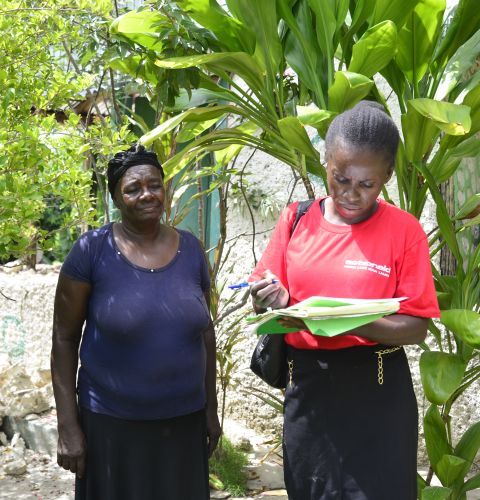
Ysnelle Jean, 36, is a seamstress and mother of four children in Haiti. She’s also a woman first responder, trained by ActionAid to take vital steps to help her community if disaster strikes.
So, when a major 7.2 magnitude earthquake ravaged Haiti on August 14th, 2021, she took action.
Ysnelle checked on her neighbours and visited areas where homes had been flattened by the quake, which has claimed more than 2,000 lives.
The most important thing was to find a shelter for women to protect them. Because we know that they are exposed to sexual violence, especially rape after any disaster.
Even as the aftershocks continued, Ysnelle carried on visiting communities and providing guidance on how to rescue survivors trapped under rubble.
She said the training and first aid equipment she received from ActionAid helped her in her role.
Page updated 1 September 2026