Girls’ education
How education for girls helps break the cycle of poverty
There is no dispute about the benefits of education, especially for girls.
- Better-educated women tend to earn more, have better jobs, and invest their earnings into their families. Every additional year of school a woman attends increases her wages by an average of 12 percent.
- Increasing girls' education reduces infant and maternal mortality. Educated mothers have fewer pregnancies, are less likely to give birth as teenagers, and are better able to access the maternal healthcare they need.
- Increasing girls' education reduces child marriage. Across 18 of the 20 countries with the highest prevalence of child marriage, girls with no education are up to six times more likely to marry as children than girls with a secondary education.
- Education helps give women the skills they need to take on leadership roles, including political positions. In those roles, they are much more likely to advocate for policies that benefit family and community life, like improved education and social services.
How ActionAid Girls' Clubs help girls stay in school
ActionAid runs Girls’ Clubs in schools, and in community spaces for girls not currently in school. These clubs offer a safe space for girls to learn about their rights, discuss issues and share experiences.
In clubs girls also build their leadership skills so they can speak out in school, at home and in the community with confidence.
Supported by ActionAid, girls are leading their own positive change and challenging the harmful practices that impact girls, like child marriage and female genital mutilation (FGM).

Navigating education and basic needs amid rising costs
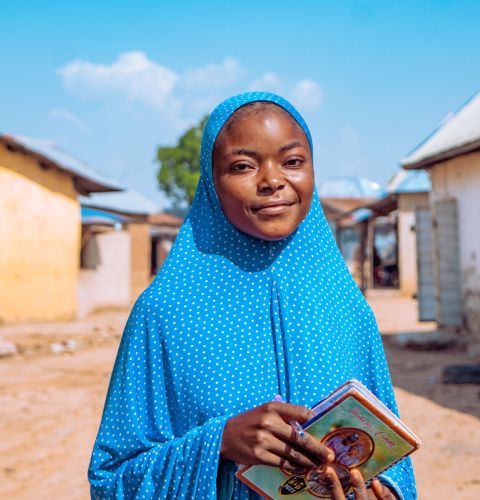
Fauziya is a student from Gofina district, Nigeria, facing the harsh realities of soaring living and education costs.
It has not been easy for me in school because photocopying a handout is now expensive."
Fuel scarcity and power outages have further disrupted daily life, affecting students’ ability to study and communities’ access to essential services. Basic necessities like sanitary pads have also become harder to afford. “Pads used to be 150 naira, but now it’s almost 500, and the quality is lower,” she says.
Through ActionAid programs, young women like Fauziya can receive support to meet their educational and personal needs, access menstrual health products, and build resilience to rising costs and economic hardship.
How education helps end violence against girls
Many girls suffer discrimination at school through violence and prejudice. This results in girls dropping out of school, which perpetuates gender inequality.
We work with local communities to develop specific solutions to protect girls against violence. In the Upper West Region of Ghana, many teenage girls are being violently abducted on their way to school to be forced into child marriage. ActionAid reports more than 50 girls a year are being taken.
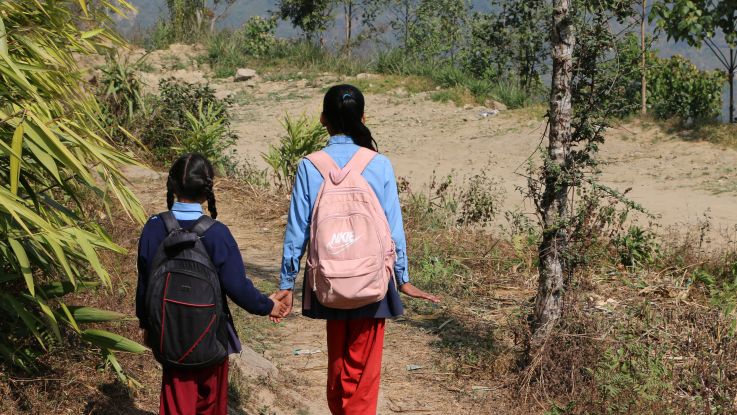
Girls are most at risk of attack during the rainy season, when they must walk through fields of long grass to get to school, where attackers can lie in wait.
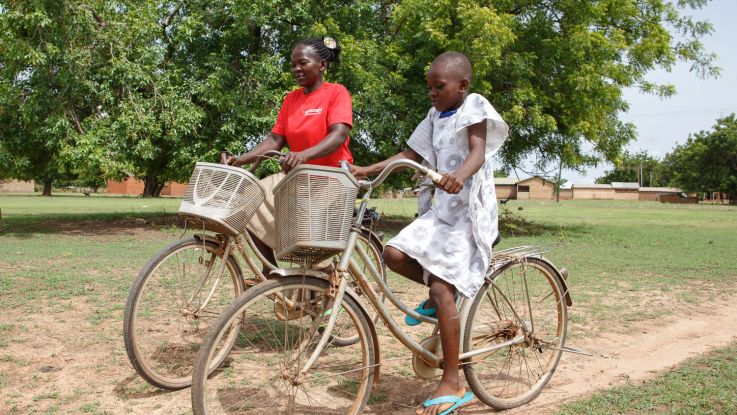
One initiative ActionAid uses to prevent this happening, with great success, is giving bicycles to girls at risk of forced marriage. The bikes cut down the girls' long and dangerous route to school, meaning that they are less at risk of abduction, and they don't have to leave so early in the morning when it is still dark.
Why disasters stop children from attending school
For many children, one of the impacts of a disaster is that they are no longer able to attend school, meaning that they miss out on a vital part of their education.
Girls are two and a half times more likely to be out of primary school if they live in conflict affected countries.6
In an emergency, girls especially are at risk of being forced to drop out of school, to help support their families or to marry.
ActionAid helps children to continue to learn in all situations. In Bangladesh, our shelters ensure schools continue during the monsoon, which brings devastating floods to low-lying areas.

Joyce, 21, a student in Imvepi refugee settlement.
Esther Mbabazi/ActionAid
Advocating for girls’ education in Imvepi refugee settlement
Joyce, 21, is a senior student in Imvepi refugee settlement, having fled South Sudan with her mother and siblings due to ongoing conflict. In Uganda, she feels safe and secure, a stark contrast to the constant gunfire she grew accustomed to back home.
Access to education at Imvepi and training from ActionAid’s Community Transformation Agenda (COTA) has given Joyce confidence and a sense of purpose. She has become a passionate advocate for girls’ education and opportunities in her community, encouraging others to claim their right to learn.
Looking ahead, Joyce aspires to become a lawyer, though she is aware of financial hurdles. Her vision extends beyond herself: she wants to inspire other young women in Imvepi to pursue education, gain independence, and build a future where they can thrive despite displacement.
The training has given me confidence. I want more young women to claim their right to education and become self-reliant.”
How you can help sponsor a girl's education
You can sponsor a girl and support her whole community to help her get the high-quality education that is her right. It pays for schoolbooks, fees, equipment and making sure they can get to school safely. It can even pay for a whole new school building in the village or town where the sponsored child lives.
By investing in education, children are given the skills and knowledge they need to build a better life for themselves.
Find out more about child sponsorship and how it works.
Footnotes
- 1https://www.unicef.org/education/girls-education
- 2https://www.unesco.org/en/articles/progress-girls-access-education-what-new-unesco-data-reveals
- 3https://www.unesco.org/en/articles/twice-many-girls-boys-will-never-start-school-says-new-unesco-gender-eatlas
- 6https://thedocs.worldbank.org/en/doc/9b9ecb979e36e80ed50b1f110565f06b-0200022023/related/WBG-FCV-04-14-23-e-version-FINAL.pdf
Page updated 6 October 2026