2025 breakthroughs: real wins against gender-based violence
Amid devastating numbers — from a woman killed every three days in the UK to one in three women worldwide experiencing violence — 2025 has finally delivered signs of real, hard-won progress. From new laws to global movements, women are pushing governments to act, and it’s working. 2025 has brought real signs of change.
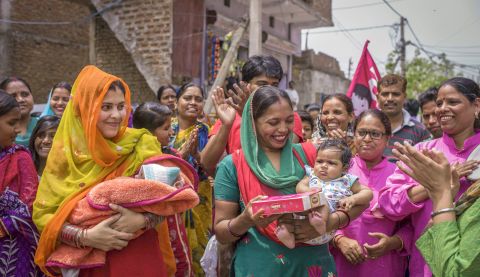
Mothers with their new born daughters at Beti Utsav celebration at Bhalswa, New Delhi. Photo: Poulomi Basu/ActionAid
Every three days, a woman is killed in the UK. Around the world, one in three women will experience violence in her lifetime.1
Those numbers are horrifying, and they haven’t shifted enough.
But here’s the thing: whilst the statistics remain devastating, 2025 has also brought something we desperately need, real victories worth celebrating, and concrete tools to hold those in power accountable.
Here’s what progress looks like when women's movements lead it.
Africa just made history
In February 2025, the African Union adopted something extraordinary: the first-ever continental legal framework dedicated solely to ending violence against women and girls.2
This isn’t a symbolic gesture or a “nice to have.” It’s a binding convention that requires governments to act.
And what makes this convention transformative is how comprehensive it is. It recognises that violence isn’t only physical:
- It explicitly includes digital violence, acknowledging that deepfakes, cyberstalking, and online harassment count.
- It introduces a Circle of Champions on Positive Masculinity, because ending violence also means rethinking how we raise boys and define power.
- It recognises that women don’t experience violence equally, that poverty, disability, race, displacement and class intersect to increase risk. It names those realities and demands action that reflects them.
By July, six countries had already signed: Angola, Burundi, Djibouti, the Democratic Republic of Congo, Liberia, and The Gambia.3
Now, the pressure is on for rapid ratification and real implementation led by women’s rights organisations and feminist movements across Africa.
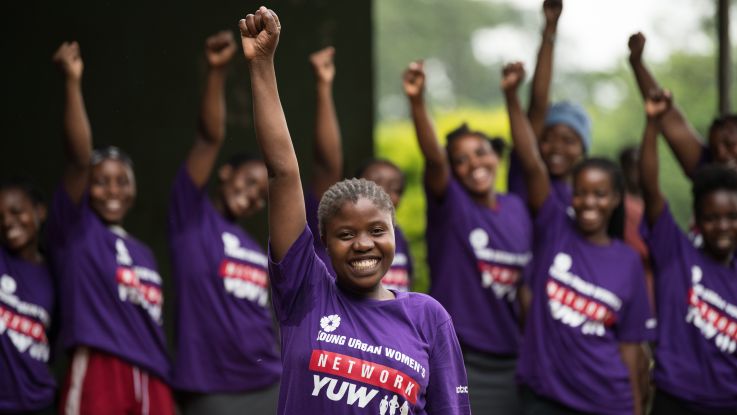
Groups like Young Urban Women (YUW) are already mobilising communities to ensure governments deliver not just words, but change.
The UK is finally taking stalking seriously (sort of)
After years of survivors being dismissed or ignored, the UK’s 2025 Crime and Policing Bill introduced long-overdue protections for survivors of stalking.
Police can now disclose a stalker’s identity to victims, even when abusers hide behind multiple online aliases. It sounds basic, but for too long, “data protection” loopholes left women terrorised by faceless perpetrators.
The government also announced a £13 million National Centre for Violence Against Women and Girls and Public Protection4, promising a specialist approach that treats gender-based violence with the same urgency as organised crime or terrorism.
It’s a start a long-overdue one, but it also underlines how years of austerity hollowed out the system meant to protect women. Progress depends on more than a single bill. It demands proper, long-term investment in women’s services and survivor-led change.
Connecting the dots: climate change fuels violence
A landmark UN study in 2025 confirmed what women on the frontlines have been saying for years: climate change is driving a surge in gender-based violence. Without action, it could be linked to one in ten cases of intimate partner violence by the end of the century.5
Climate change is deepening the social and economic pressures that drive rising levels of violence against women and girls.
As extreme weather, displacement, food shortages, and economic instability increase, so does the risk and severity of gender-based violence.
These impacts fall heaviest on communities already living with inequality and insecurity, where women face greater exposure to violence and fewer resources to stay safe. If warming reaches 2 °C, an additional 40 million women and girls could experience intimate partner violence each year by 2090.
But here’s the hopeful part, we already know how to fight back. Across the world, women’s organisations are proving that tackling climate injustice and gender-based violence can go hand in hand.
In Haiti, Vanuatu, Liberia, and Mozambique, programmes are:
- Retraining midwives who performed FGM to earn sustainable livelihoods through climate-smart agriculture
- Ensuring disaster response includes support for survivors of violence
- Building resilience that centres women's safety and economic security
These programmes protect lives and they rebuild communities on stronger, fairer foundations.
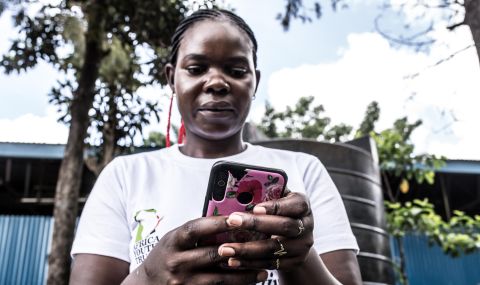
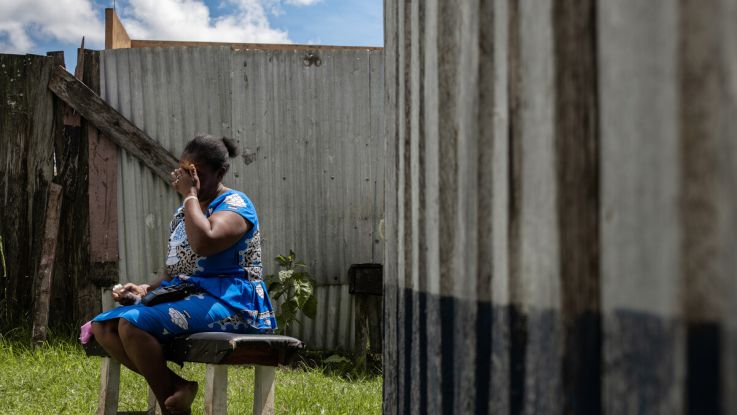
Women in Nairobi use technology to increase access to justice and support for GBV survivors. The SMS platform operates 24 hours a day, text messages are received by trained volunteers, including paralegals and health workers.
Digital violence takes centre stage
This year, the UNiTE Campaign6 turned the spotlight on a form of violence many experience but few can name: digital violence against women and girls.7
It’s everywhere, and it’s growing.
With 90–95% of deepfakes being non-consensual pornography (and 90% of those targeting women), this global focus came none too soon.8
From revenge porn to coordinated hate campaigns against women in public life, tech companies have profited while women pay the price.
The UNiTE Campaign demands they finally take responsibility, not just in content moderation, but in law, design, and algorithmic accountability.
Progress is possible when we push for it
If 2025 has shown us anything, it’s this: when women organise, legislate, and lead, systems can change.
The wins are fragile. None of them are perfect, and none of them go far enough. But they matter. They're proof that change doesn't just happen at the margins. It happens when pressure, persistence and people power meet political will.
So yes, the numbers are still devastating. But this year, we’ve also seen something just as real: hope that’s strategic, organised, and unstoppable.
Let’s keep that energy going beyond the 16 Days of Activism. The fight to end gender-based violence and the movement for justice is global.
We can make sure the progress we’ve seen in 2025 is just the beginning, and that every woman, everywhere, can live free from violence one day.
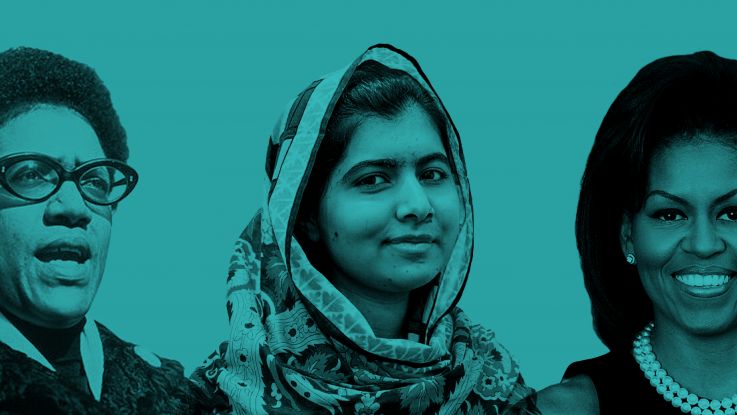
The fight isn’t over. As Audre Lorde reminds us "I am not free while any woman is unfree, even when her shackles are very different from my own.”
Want to turn hope into action?
Here are some ways to support the global movement:
- Follow and amplify women's rights organisations in your region
- Support groups working at the intersection of climate justice and GBV
- Demand your government ratifies international conventions like the Istanbul Convention
- Hold tech companies accountable for digital violence
- Join the 16 Days of Activism campaign each November 25–December 10
If you or someone you know is affected by violence:
- National Domestic Abuse Helpline: 0808 2000 247 (24 hours)
- Rape Crisis England & Wales: 0808 500 2222
- Refuge: 0808 2000 247
- Respect Men’s Advice Line: 0808 8010 327
- Galop (LGBTQ+): 0800 999 5428
- In immediate danger: dial 999 (press 55 for silent calls)
Footnotes
- 1
- 2
- 3
- 4
Source: UK Government/Home Office announcement, February 2025 GOV.UK, College of Policing
- 5
https://www.un.org/sustainabledevelopment/blog/2025/04/climate-crisis-driving-surge-in-gender-based-violence-un-report-finds/
- 6
- 7
UK Government Crime and Policing Bill 2025 factsheets and announcements
- 8
Source: Sensity AI research (formerly Deeptrace Labs), tracking deepfake videos since December 2018