16 Days: violence against girls is an ongoing crisis
Girls are facing violence everywhere, from in their homes to the streets, and the justice system keeps failing them. For 16 Days of Activism, we are spotlighting what violence looks like for girls around the world today.
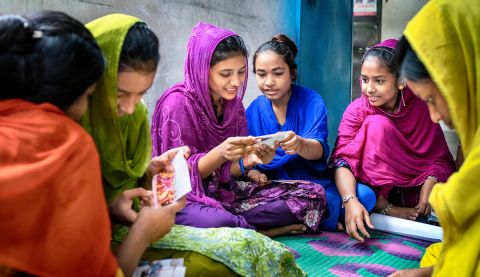
Girls from the Bangladesh research team spending time together. Photo: Fabeha Monir/ActionAid
Girls around the world are raising the alarm: violence is woven into far too many parts of their daily lives.
Through girl-led research supported by ActionAid in Bangladesh, Ethiopia, Indonesia, Sierra Leone and Nigeria, girls are documenting how danger, discrimination and neglect follow them from their homes to their schools, across their communities, and even into displacement settings.
Their findings make one thing clear: gender-based violence against girls is not a series of isolated incidents. It is widespread, systemic, and often made worse by the very structures that are meant to protect them.
Girls are not only navigating physical and sexual violence, but also the emotional abuse, stigma, insecurity and institutional failures that compound this harm. In conflict zones, on the way to school, within overcrowded camps, or in classrooms where safety should be guaranteed, girls are confronting risks at almost every turn. And when they seek help, too many face disbelief, blame, or systems so slow and ineffective that justice feels out of reach.
This blog explores the key questions their research raises and some commonly asked questions about girls and the violence they face.
How common is gender-based violence against girls?
Girl researchers reported that gender-based violence against girls is alarmingly widespread and occurs across all settings - at home, in schools, and in communities. Violence takes many forms beyond physical abuse: for example, girls face harassment while travelling to school, verbal abuse at home, forced marriage, and emotional violence.
What makes this violence particularly devastating is the response - or lack thereof. Girls who experience violence are often blamed rather than supported, with community members suggesting they were "too provocative" or brought the abuse on themselves. This victim-blaming creates a culture of silence where girls are afraid to report violence, knowing they won't be believed or helped. While people tend to agree that survivors deserve justice, the actual systems in place often fail to protect girls, sometimes forcing them to continue living with their abusers while cases slowly move through inadequate justice systems.
How does conflict and displacement affect girls' safety?
Conflict and displacement severely undermine girls' safety in multiple, interconnected ways.
Increase in gender-based violence: girls face significantly increased risks of gender-based violence during and after conflict and displacement. This includes domestic violence, sexual harassment, rape, trafficking, and forced early or child marriage. In overcrowded displacement camps or unstable environments, the breakdown of social, family, and community protection mechanisms further exposes girls to these dangers.
Restricted movement and reduced safety: ongoing insecurity and violence restrict girls' ability to move freely. Even daily activities like going to the market or school become dangerous, leading to isolation and vulnerability. Girls are sometimes forced into “transactional sex for food” due to lack of resources and protection in camps or conflict zones.
Disrupted education: conflict dramatically escalates the risk that girls will drop out of school, with girls being 90% more likely to be out of secondary school than those in peaceful areas. This not only jeopardises their immediate safety (as schools can provide protective environments), but also affects their long-term prospects and perpetuates cycles of vulnerability and exploitation.
Loss of coping and support mechanisms: family, social, and community coping networks weaken or disintegrate during crisis, leaving girls without necessary support and making them easier targets for exploitation, trafficking, and abuse.
How can we make schools safer for girls?
Schools have enormous potential to create safer environments for girls, but the girl researchers ActionAid works with have reported that many currently fail to provide adequate protection, while some even contribute to the problem. Their research revealed that girls face multiple forms of violence and harassment within educational settings, including inappropriate corporal punishment, sexual advances from teachers, and harassment from male students.
However, schools can become protective spaces through concrete actions. This includes training all staff on child protection and creating clear policies against harassment and abuse. Schools need to provide safe, private toilets for girls, well-lit pathways and secure transportation options.
Teacher training is crucial in order to foster a truly safe and supportive environment for girls: teachers should be able to share information about sexual and reproductive health and creating clear policies and a culture which does not stand for any harassment and abuse. However, many teachers currently avoid teaching about these topics due to embarrassment, leaving girls without vital information about their bodies and health. Comprehensive sexuality education is essential to help girls understand their bodies, recognise inappropriate behaviour, and know how to seek help.
Schools could also address harmful gender norms by ensuring equal treatment of boys and girls, challenging stereotypes in curriculum and classroom interactions, and creating girls' clubs or mentorship programs. When schools take these steps seriously and consistently enforce protection policies, they become safe havens where girls can learn, grow, and develop confidence.
What role do families and communities play in girls' safety?
Families and communities play a crucial dual role in girls' safety: they can both protect girls or put them at greater risk. Supportive families that listen to girls, challenge harmful traditions, and ensure equal treatment help keep girls safe. However, some families impose excessive restrictions on girls' movement or force them into early marriage. Communities that normalise violence against girls or fail to punish perpetrators create dangerous environments. Positive change happens when families and communities work together to challenge harmful norms and create protective systems for girls.
16 Days of Activism and violence against girls
The issues raised starkly demonstrate why the 16 Days of Activism against gender-based violence remains so urgent and necessary. While girls are still denied safety in their homes, schools, and streets, collective action is critical, both to amplify girls’ voices and to demand real accountability from families, communities, and those in power.
As we mark these 16 Days, let’s stand with girl-led movements and commit to transforming the systems that continue to fail them, ensuring that every girl, everywhere, can live free from violence and fear.
What does ActionAid do to help girls?
ActionAid works with girls around the world by listening to them, and acting on the realities that they share.
One way ActionAid has done this is through some ground-breaking research conducted by adolescent girls around the world, looking at the challenges girls face every day: the girl-researchers from every single country involved identified violence and safety concerns as one of the major issues in their lives.
ActionAid supports the girl researchers with training and mentorship, but the girls drive the entire process. By putting girls in charge, the research has had a transformative impact on both the participants and their communities.
Read more about our work: