This is what period poverty really feels like
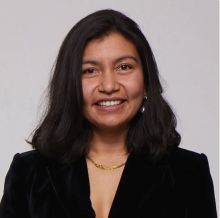
Ruby Raut, founder and CEO of WUKA, shares her personal experience of growing up with period poverty and why it still matters today. From stigma and silence to building solutions rooted in dignity, she reflects on the realities too many still face. Together with ActionAid, WUKA is partnering to demand period justice for all.

Ruby standing with her sisters posing for a photo after school in Nepal. Photo: Ruby Raut/WUKA
I grew up in Nepal, where periods came with exile, stigma and silence.
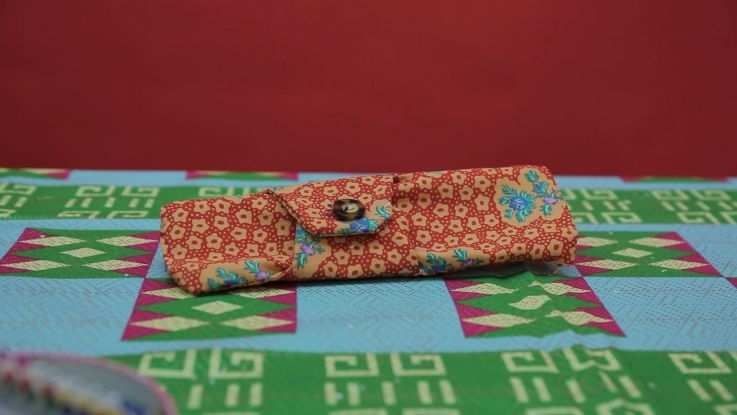
At 12, I had my first period. My mum handed me her oldest sari, cut into small pieces, and told me those were my period products. I used them until I was 20. They were reusable. They were sustainable. But they were also uncomfortable.
I had something to use, but I didn’t have dignity.
At school, there were no proper toilets or facilities. When I used those cloths, they would sometimes fall out. I’d feel so embarrassed that I would just go home. I started missing school. I started missing sports.
Period poverty isn’t just about access to products. It’s about shame, lack of education, and not having a safe space to manage your period.
And no girl should ever feel that way just for being on her period.
Why we need to talk about periods
If we want a world free from period stigma, we start at home.
It starts with talking to your parents and carers. It continues at school, wherever you spend most of your time, wherever you might get your period: at a friend’s house, on a birthday, on a road trip. A recent survey with parents of neurodivergent kids showed 89% of period education starts at home.1
Making those conversations easy and normal is the best way to build a stigma-free world.
Growing up in Nepal, periods were very visible. I saw my mum stay away from the kitchen. She wouldn’t go to the temple or attend weddings or funerals.
When I moved to the UK, periods became invisible. People don’t talk about them. We hide pads and tampons up our sleeves.
But in both places, we don’t talk enough, and that silence is global.
Questioning what we’re told about periods
If I could go back and speak to my younger self, I would tell her to question everything.

Ruby (left) in the yellow and red jacket on the truck with her family and friends as a teenager in Nepal.
We grow up thinking we shouldn’t question our parents or traditions. I followed rituals that started many generations ago. My great grandmother didn’t have period products or underwear. She was told to sit aside, and that became culture. That became the norm.
But now we have choices. We have period products. We have reusable options. We can create better solutions.
I would have asked: why are we still following these practices? Why are we not allowed in the kitchen? Why can’t we serve water for ourselves?
I would now go back and tell myself: be rebellious.
Period poverty is a global issue
I lived through period poverty myself, and it’s unacceptable that in 2026, this is still a reality.
In one of the richest countries in the world, people are still going without basic period products.
More than one in ten (11%) women and people who menstruate in the UK say they have struggled to afford period products for themselves or a dependent in the last year.2
For many, the choice isn’t simple. Nearly two thirds prioritise food, and two in five prioritise gas and electricity instead.
And the impact goes beyond affordability.
People are wearing pads or tampons for longer, or using makeshift alternatives like tissues or even paper. Some are staying home altogether, missing school, work, sports and daily life.
Period poverty is quietly excluding people. I know what that feels like.
Why I started WUKA
Everything I do today is shaped by how I grew up.
One of the biggest challenges was waste. When you use disposable pads, you don’t know where to throw them. We didn’t have bins at school or at home. You either bury them or burn them. The only option that really worked was sustainable period products.
When I moved to the UK, I saw something completely different. Everything was disposable. You go to the period product aisle and almost everything is single-use.
So I decided to create my own sustainable period underwear.
I started WUKA because I never wanted another girl to feel the shame I did. Periods are not dirty or embarrassing. They’re natural. They’re powerful. And they deserve care that reflects that.
Why I’m fighting for period justice with ActionAid
I’ve seen firsthand how deeply period poverty affects lives. That’s why this partnership matters to me.
I’m proud to be standing alongside ActionAid to demand period justice for all to help build a world where menstruation is treated with dignity, where no one is held back from learning, working or socialising because of their period, and where sexual and reproductive rights are respected.
What ActionAid is doing resonates deeply with how I grew up. I genuinely don’t want any girl, anywhere in the world, to grow up experiencing period poverty. Because it sets you back in school, in sport, and in life.
When I was growing up, I didn’t have a choice. All I had was my mum’s sari.
Now, there are more options. But globally, many people still don’t even have access to a single period product.
That’s the real issue. This burden should not fall on individuals. It should fall on society, on systems to ensure that everyone has access to period products without financial, environmental or social cost.
Because dignity should not depend on where you are born.
This partnership is not just a one-off. It’s a commitment.
We want to raise awareness, start conversations, and bring the realities of period poverty into the open.
Because the more we talk about it, the more we understand it.
And the more we understand it, the closer we get to ending it.
We’ve partnered with ActionAid UK to help tackle period poverty - in the UK and globally.
Together, we’re working to expanding access to reusable period care, supporting menstrual health education and challenging stigma around periods.
Please support women and girls’ demands for equality and justice, and donate today.