Reusable sanitary pads and sustainability

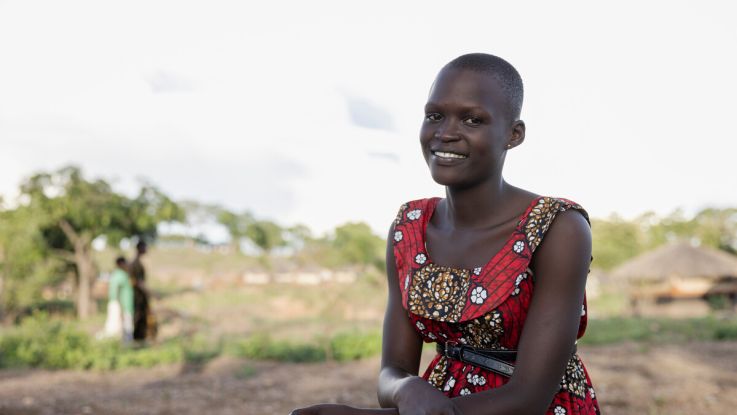
Iman lives in Kiryandongo Refugee Settlement, where her family came after fleeing war in Juba, South Sudan. She lives with her grandmother and goes to school.
Esther Mbabazi / ActionAid
How periods affect education
Iman, 13, lives in Kiryandongo Refugee Settlement after her family fled war in Juba, South Sudan. She now lives with her grandmother and attends primary school, where Mathematics is her favourite subject.
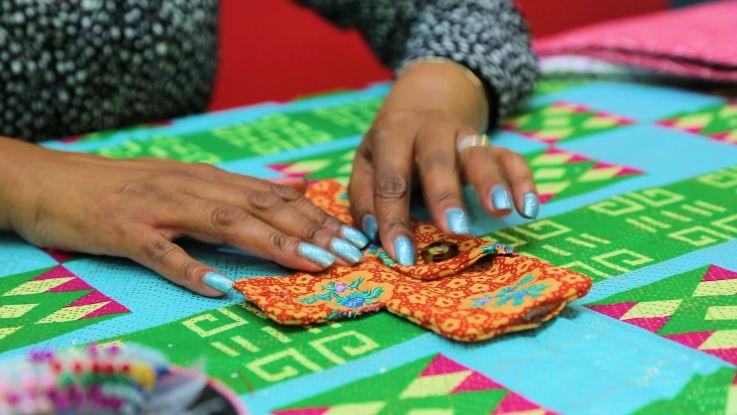
Although she has not yet started her period, Iman chose to attend Razia’s reusable pad-making workshops out of curiosity and a desire to be prepared. She plans to use the reusable pads she makes instead of spending money on disposable ones from the shop.
Iman shares what she has learned with other girls in the settlement. “Periods are common to women,” she says, stressing the importance of washing underwear and reusable pads properly to avoid infections.
At school, boys often make fun of girls when they are menstruating, and many of Iman’s friends stay home during their periods. Through the workshops, Iman is also learning about her rights — building knowledge and confidence to support herself and others to stay in school.
Some of my friends don’t go to school when they're on their periods. They may tell their teachers or headteacher that they are on their periods and ask for a few days off before they come back to school. In the workshops with Razia, I’ve learnt that I have rights and I have a right to have a voice and to speak out. You can’t give your rights to anyone else.”
Reusable sanitary pads and education
School girls in Malawi often have to wear a thick, unabsorbent cloth called Nyanda which chafes their skin, stains their clothes, and is noticeable due to its bulk.
This makes the young girls vulnerable to bullying and creates shame and stigma around the natural process of menstruation. Due to the discomfort and the teasing, some girls end up skipping several days of school.
For example, one in 10 girls in Africa miss school because they don’t have access to sanitary products, or because there aren’t safe, private toilets to use at school.3
As part of an ActionAid project in Malawi schools, students now receive reusable sanitary pads and can practise safe menstrual health.

Equipping girls with reusable pad-making skills, confidence and power
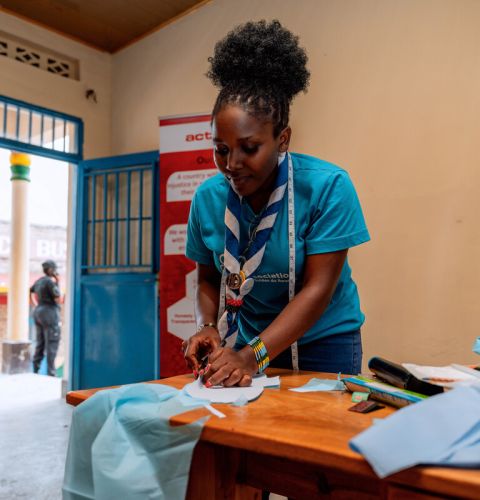
Razia, 25, is a feminist leader and activist who attended Stepdown training workshops under ActionAid’s Global Platforms. Since then, she has led workshops on making reusable pads, women’s rights and family planning ensuring girls have the knowledge and tools to manage their periods with dignity.
Determined to reach as many girls as possible, Razia visits homes to speak with parents, approaches schools and churches, and requests time at community gatherings to talk about girls’ rights. She first learned how to make reusable pads herself through YouTube, investing in mobile data to follow step-by-step tutorials before training her peers, who now co-facilitate sessions with her.
To sustain the work, Razia encourages participants to form savings group to buy materials for pads and soap. Girls now make enough pads for themselves, and extras to sell.
Razia conducts several workshops on making reusable pads, women's rights and family planning at refugee settlements in Uganda.
Esther Mbabazi / ActionAid
Menstrual cups and other sustainable period products
ActionAid works closely with women, girls and people who menstruate to help them access a range of products that help them manage their periods with dignity - and sustainably.
We have set up a project in Malawi that distributes menstrual cups to those who cannot afford menstrual products.
Menstrual cups are made of silicone and last 10 years, leaving very little waste. They are also safe and easy-to-use, as they can be sterilised using boiling water.
Our work increases choice and access to menstrual products, and we put local people's voices front-and-centre when determining which products are most useful for their communities.
However, we know these solutions don't work for everyone. From our discussions with the women and girls we work with, we know that menstrual cups are not understood or not considered culturally appropriate in some of the predominantly rural communities we work with.
Menstrual cups need to be inserted into the body and are regarded with suspicion for this reason. It is also possible that this solution could lead to cultural stigma, stress and further complications, for example if a woman or girl has been subject to FGM.
Watch a BBC short film by Gloria Achieng about ActionAid's menstrual cup project in Malawi.
Exploring all options for menstrual health
Although ActionAid is piloting projects to assess sustainable options that help women make reusable pads, or support girls in using menstrual cups, we know that these options are not suitable for all those we work with.
For example, in conflict zones and during humanitarian crises where there is an immediate need, and where there are no safe washing facilities, we understand that reusable sanitary pads and menstrual cups are not an effective option.
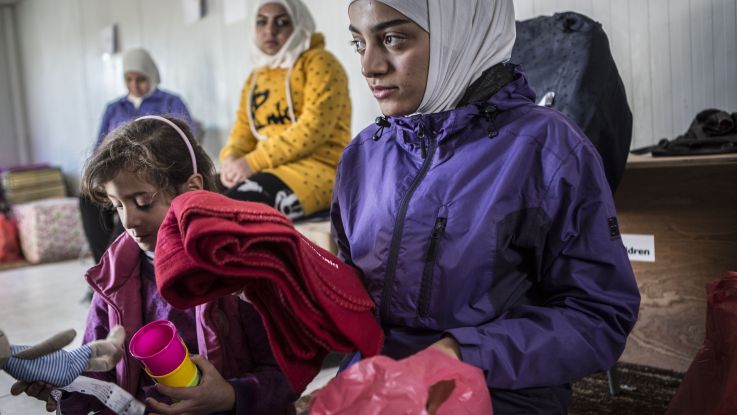
So, while we explore several sustainable options as an alternative to the store-bought sanitary pad, we still need your help to support refugees in places like Jordan, Greece, East Africa and Bangladesh with sanitary pads.
Footnotes
- 1https://plasticfree.org.uk/2024/10/02/seeing-red-on-period-plastic/
- 2https://www.joghr.org/article/32436-period-poverty-why-it-should-be-everybody-s-business
- 2https://www.fpamalawi.org/2022/05/09/girls-in-menstruation-trouble/
- 3https://blogs.worldbank.org/en/education/menstrual-health-and-hygiene-what-role-can-schools-play
Page updated 16 February 2026