Period poverty
1 in 10
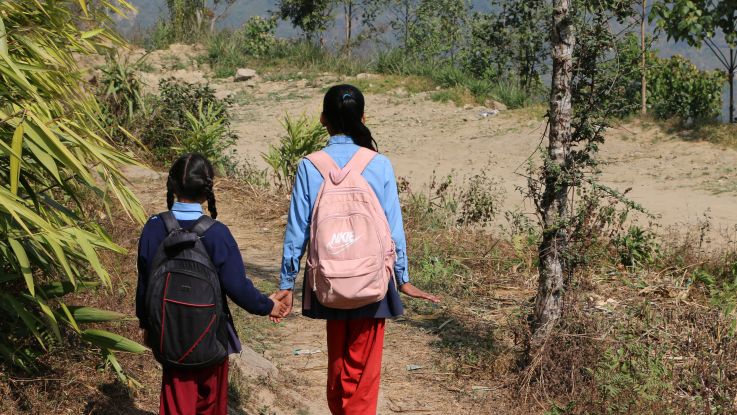
girls in Africa miss school because they don’t have access to menstrual products, or because there aren’t safe, private toilets to use at school.3
65 %
of school-age girls in Kenya do not have access to menstrual products.4
12 %
of India's 355 million menstruating women cannot afford menstrual products.5
What is period justice?
Period justice means creating a world where everyone who menstruates can manage their periods safely, confidently and with dignity without discrimination.
It recognises that menstruation itself isn't the problem. Periods become a barrier when social, economic and political inequalities prevent people from accessing the products, information, facilities, healthcare and support they need.
These inequalities can include
Discrimination
Women's and girls' needs can be overlooked in decisions about healthcare, education, workplaces and public services.
Harmful gender norms
Menstruation can be surrounded by shame, stigma and myths that make people feel they have to hide their bodies or their periods.
Underfunded public services
Schools and communities may lack clean water, safe toilets, menstrual products or accurate menstrual health education.
Unequal power
Women and girls may have less power to influence the decisions, policies and systems that affect their bodies and their lives.
When these inequalities overlap, having a period can mean:
- missing school
- dropping out of sport or other activities
- risking your health by using unsafe materials
- losing confidence
- facing harassment or exclusion
- missing work or other opportunities
Over time, those days add up, lessons are missed, confidence can be lost and opportunities can disappear.
Period justice means changing the conditions that create these barriers.

Breaking the silence around period poverty
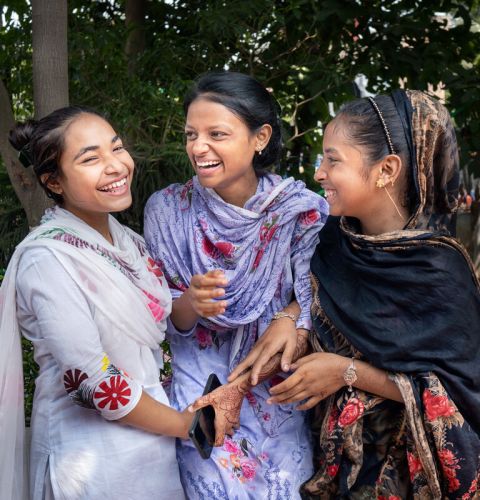
At just 16, Mim is helping girls in her community in in Narayanganj, Bangladesh talk openly about menstruation and demanding safe, affordable access to pads in schools.
Mim is a member of a girls’ research group supported by ActionAid. After receiving training on child marriage, menstruation and child labour, she helped lead a girl-led research project speaking to 76 girls about their health, safety and daily challenges.
Through the research, Mim discovered how deeply period poverty affects girls in her community. “Some girls cannot afford sanitary pads because of their parents’ poverty,” she explains. “They use old clothes instead and fear what people think when they dry them in the sun.”
Mim now shares practical advice with other girls on how to safely wash and reuse cloth. “It is not a bad thing and there’s nothing to hide,” she says.
She is also advocating for menstruation booths in schools, where girls can buy low-cost pads. “It is very important… so we can study in school and buy pads when needed.”
Now I am brave enough to know that we girls can do anything.”
Mim, 16, along with other girls took part in ActionAid supported training on child marriage, menstruation and child labour and led a research project to explore the realities faced by adolescent girls.
Fabeha Monir/ActionAid
How ActionAid tackles period poverty
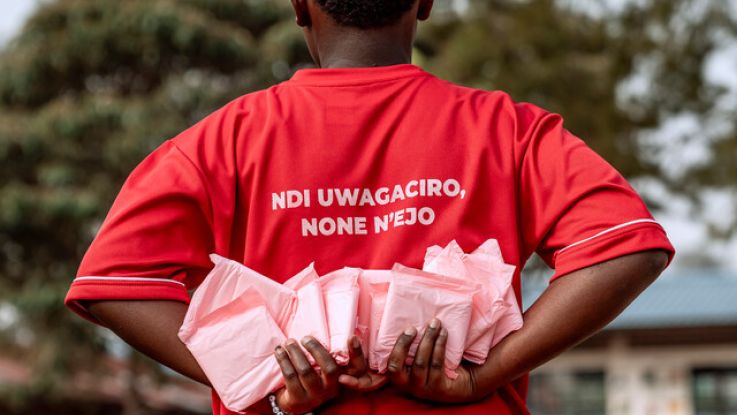
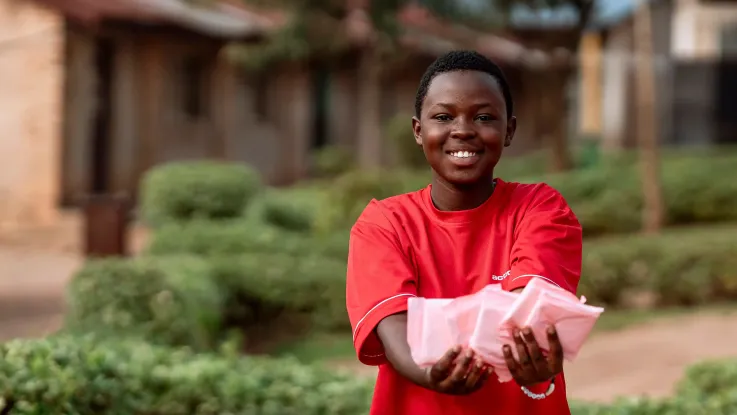
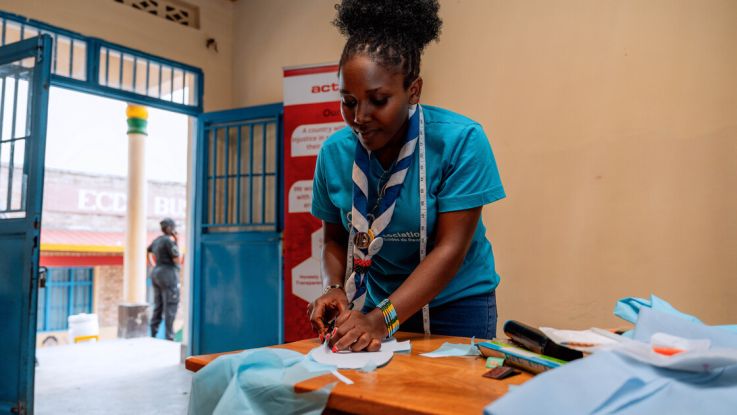
- In many of the world’s poorest countries, we provide training on how to make reusable sanitary pads, which are affordable and sustainable.
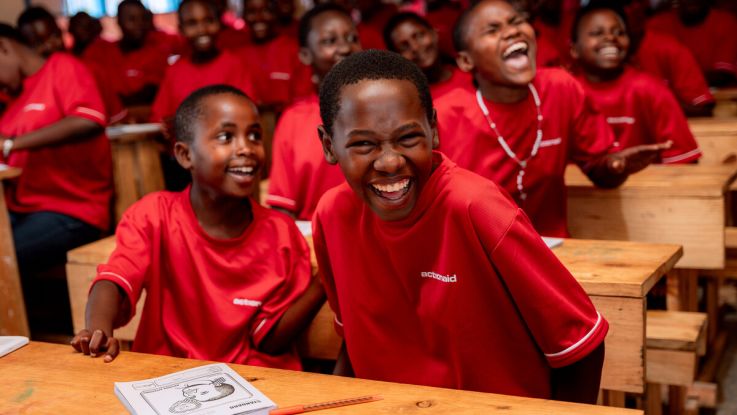
- We support girls' clubs where girls learn about their bodies, menstruation and health, build confidence and come together to advocate for their rights. We also support girls' rooms in schools, which provide a safe, private space and access to products, helping girls manage their periods freely and without shame.
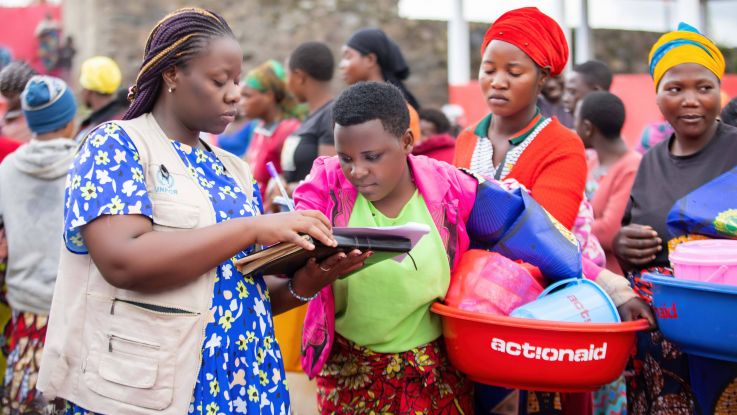
- In humanitarian crises, we distribute kits containing menstrual products, soap and clean underwear, so women, girls and people who menstruate can manage their periods safely and with dignity.
- And we’re working with communities to shift attitudes and end the stigma that harms women and girls.
Where can I donate sanitary pads?
We often receive generous offers from our supporters to donate surplus menstrual products to the communities we work in around the world.
ActionAid always tries to source menstrual products as locally as possible - sourcing goods in this way helps us to cut down on costs, while ensuring the items we provide are appropriate for the local environment and culture in the countries where we work.
This not only supports the local and national economy but also facilitates a more efficient response, as it means we don’t have to depend on regional postal systems.
For this reason, although we are very grateful for these kind offers, we are unable to accept donations of menstrual products in the UK. We would recommend products of this kind be donated your local food bank or a specialist organisation like the Hygiene Bank.
If you'd like to support our work ending period poverty in rural and urban communities across Africa, Asia and Latin America, please donate today.
Footnotes
- 1
https://www.who.int/news-room/fact-sheets/detail/menstrual-health
- 2
https://www.who.int/news-room/fact-sheets/detail/menstrual-health
- 3https://blogs.worldbank.org/en/education/menstrual-health-and-hygiene-what-role-can-schools-play
- 4https://openknowledge.worldbank.org/server/api/core/bitstreams/a92f6ee5-e932-4dcd-ac8d-aaeb319a72f7/content
- 5https://documents1.worldbank.org/curated/en/497961622035770181/pdf/Tools-and-Resources-for-Task-Teams.pdf
Page updated 18 August 2026