Periods and girls’ education
Ending period poverty in schools
In Rwanda, many girls miss up to 50 days of school or work every year because of period poverty and stigma.2
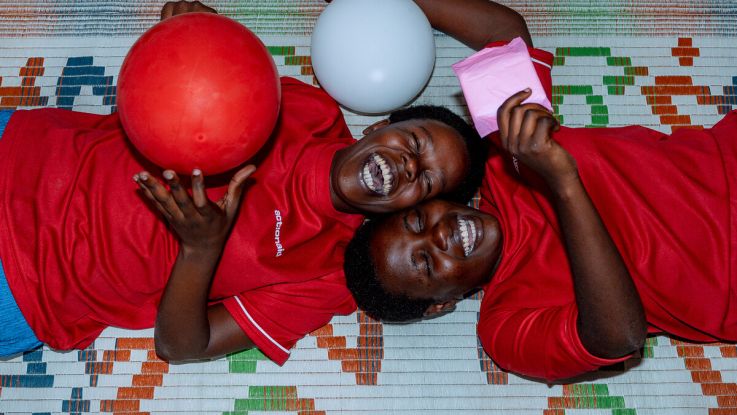
ActionAid has built safe spaces for girls in nine schools in Rwanda. These safe spaces are rooms run by a matron in a separate building away from the school, equipped with a toilet, a shower, menstrual products, spare clothes, and a private space to change and rest.
These safe spaces ensure that girls don't have to fear the embarrassment of stains on their clothes, or boys in their class bullying them about it, which would stop them from going to school.

How ending period poverty improves education
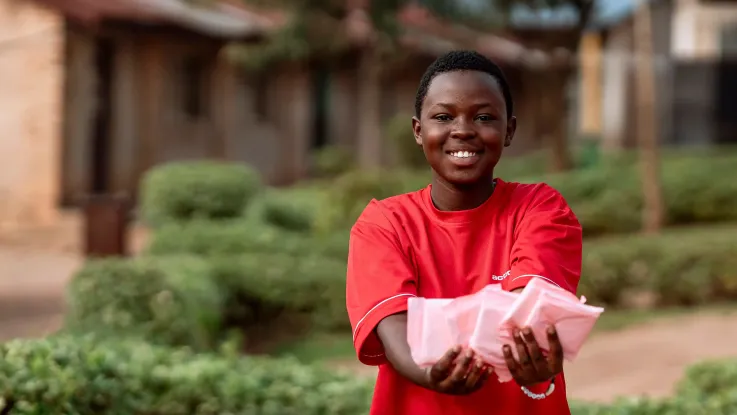
Nyakang, 15, is a South Sudanese girl living in Kiryandongo refugee settlement with her mother.
When Nyakang started her period at 14, she was scared and didn’t have pads. Her mother managed to get her some, and later, she received pads from Razia, which also helped her friends who had none.
Through ActionAid’s reusable pad workshops, Nyakang has learned to make her own pads. She shares these with friends and encourages them to join the workshops, helping other girls manage their periods safely and continue attending school.
Despite her efforts, Nyakang sometimes does not have enough pads due to financial constraints. She says she feels bad when she cannot manage her period properly. When she has pads, she participates fully in school and daily activities without restriction.
Nyakang is aware of her right to education. Inspired by the support she has received, Nyakang dreams of becoming a teacher to help other children and girls like her in the future.
Nyakang is a South Sudanese girl living in the Kiryandongo Refugee Settlement.
Esther Mbabazi / ActionAid
Periods education for girls in Rwanda
In some communities that we work with, taboos and secrecy surrounding periods means that often girls have never heard of menstruation before their first period, making it a confusing and traumatic experience.
Without sex education, myths about periods continue.
Girls tell us that they've been told they can't do certain things in their daily life when they have their period, from using salt in their cooking to milking animals, or that they can't get pregnant if they have sex while they have their period.
Our girls' clubs and period safe rooms give girls an environment where they can get information and ask questions about periods, sex and pregnancy, so that they are better informed about their bodies.
Building safe, separate toilets at school
Without a safe, private toilet at school, girls can't feel secure and comfortable going to the toilet.
This is a problem throughout girls' school lives, but it is especially problematic when they are on their period.
A study in Ethiopia found that 50% of girls miss between one and four days of school per month due to menstruation.3
The impact of girls losing out on secondary education is huge: if all women had a secondary education, child deaths would be cut in half, saving 3 million lives.4

Helping girls to manage their periods in Ethiopia
The current toilet facilities at Annaso school, in the Girar Jarso community, Ethiopia, are little more than a hole in the ground. All the children in the school use the same toilet.
ActionAid is working with partners in the community to build a new school with separate toilets with running water.
Birhane Kenenies, who teaches at the school, says:
It’s especially important for girls to go to school because when they drop out they often get married. When they attend school they gain confidence and we educate them about their rights and about equality.”
Inadequate school toilets in Ethiopia can lead to girls missing school due to periods
Greg Funnell/ActionAid
Page updated 8 September 2026