Girl maths: the arithmetics of period poverty
One in ten people in the UK have struggled to afford period products in the last year forcing many to choose between pads, food, heating and other essentials.
As the cost-of-living crisis deepens, period poverty is still quietly keeping women and girls out of schools, workplaces, sport and public life.
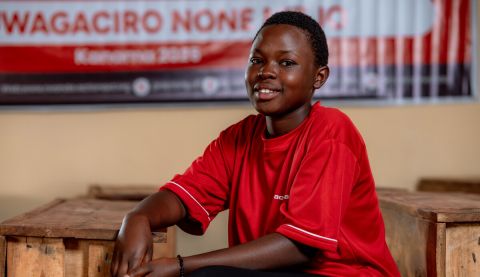
Amadia knows girls are less likely to miss school when they have practical solutions and peer support — from making reusable pads to having safe, open conversations about periods. Photo: Christie Ntwari/ActionAid
Sometimes doing girl maths is not just rationalising regular spending habits or trying to justify impulse purchases, it's standing in the Tesco's toiletries aisle, holding a pack of pads, peering at the price sticker and doing mental gymnastics about whether you can stretch the pads and tampons you already have this month for another cycle.
This is what period poverty looks like in Britain in 2026.
Period poverty stats in the UK
According to our 2026 poll at ActionAid UK, we found that more than one in ten (11%) people who menstruated in the last year struggled to afford period products for themselves or a dependent.1 Among them, 64% prioritised buying food instead. 40% chose gas and electricity. Others chose toilet roll, clothes, fuel.
This is happening in one of the wealthiest countries in the world - women are deciding whether they need bread or pads more urgently.
If you’re reading this, you likely identify as a feminist. You may have shared posts about bodily autonomy, gender equality, or the cost-of-living crisis. But this should stop you short: periods are still quietly excluding women and girls from public life around the world.
Our poll showed that 22% of those who couldn’t afford period products said they stayed home as a result. 35% people said they avoided exercise or sport because of their period in the last year. One in ten missed school, college or university. 12% avoided going into work.2
This is how inequality reproduces itself, it's small moments that snowball and change your life for the worse. A missed PE lesson here, a skipped work shift there, a girl deciding not to speak up in class because she’s worried about leaking through her skirt.
And that's not to mention how physically dangerous or injurious to your health period poverty can become.
More than a third (36%) of those struggling to afford products said they kept disposable pads or tampons in for longer than recommended. Others used tissues, cotton wool, even newspaper.
If that sentence feels shocking, it’s because many of us have internalised the myth that period poverty is something that happens elsewhere: to “other women", in refugee camps or in countries far away.
But unfortunately it's 2026 and period poverty knows no borders, cultural backgrounds, or language differences.
Period poverty stats around the world
Globally, an estimated 500 million people experience period poverty. 3
Every month, more than two billion people menstruate, yet access to safe products, clean water, sanitation and menstrual education remains profoundly unequal. In many schools worldwide, girls still do not have access to private toilets or bins for menstrual waste. Millions miss education because managing a period safely remains impossible.
What connects us all is inequality. In Malawi, a pack of pads can cost more than a day’s wages.4 In Kenya, some women spend the equivalent of a full day’s income on a single packet.5 In parts of Rwanda, girls miss significant amounts of school because of lack of access to products.
Here at ActionAid, we work directly with partner organisations that work with women and girls around the world.
We know that girls are capable of speaking up for themselves and it’s their ingenuity and leadership that has led them to come up with innovative solutions to period poverty.
Yvette, who took part in one of ActionAid’s programmes, explained:
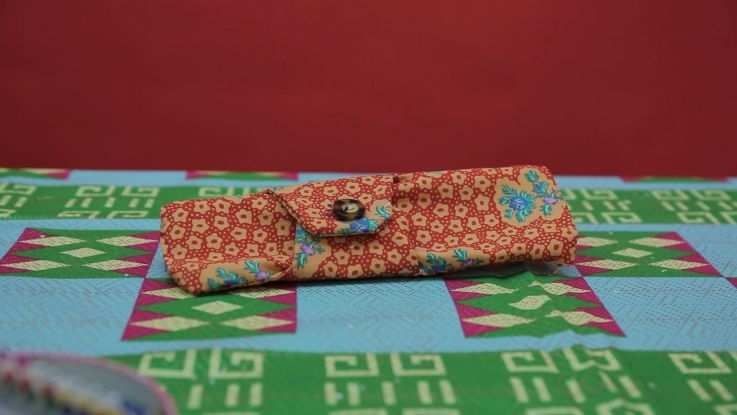
I used to think that pads are disposable and should be thrown away after one use — but I learned that we could make reusable pads when there is no money to buy new ones — finding solutions ourselves.”
“What I am taking away from here,” another girl, Shallom, said, “is learning how to track a girl’s menstrual cycle… Another thing I learned here is how to make pads… I will teach girls who cannot afford to buy pads how to make them.”
That is what feminist spaces and movements looks like, when governments fail: women and girls teaching girls how to survive.
But girls shouldn't have to spend their childhood coming up with solutions to wider, structural issues they've not created and been lumped with since puberty or even birth. Survival should be the floor not the ceiling we aspire to. What we should be demanding is period justice.
What is period justice?
Period justice is rooted in the challenge of unequal systems, policies and social norms that shame, silence and discriminate against people who menstruate.
It’s what happens when periods are treated as taboo, when girls miss school or drop out of sport because they can’t manage their periods safely, or when people are denied dignity because of a natural biological process.
Ending period poverty means providing products. But ending period injustice means transforming the systems that hold women and girls back.
It means building a world where no girl misses out on education because of her period, where no one feels shame about their body, where period products are affordable and sustainable, and where sexual and reproductive rights are respected everywhere.
Period justice shouldn't just be a trendy, empowerment slogan once a year we post on our Instagram on Menstrual Hygiene Day, it's an all round year movement.
It's a movement that asks why products essential to public participation are still treated as optional consumer goods. It asks why women’s pain and discomfort are normalised to the point that 77% of people who avoided activities due to their period said it was because of pain or side effects like fatigue and anxiety. It asks why girls continue to carry the burden of managing attitudes to periods individually instead of society removing the barriers collectively.
Most of all, it asks who gets excluded when we design economies, structure systems and build societies that assume everybody can absorb another rising cost equally.
The women in the UK and across the world who are making impossible choices already know the answer.
They are the ones staying home, missing school, skipping meals, wearing tampons too long and learning to bear the pain in silence.6
How does ActionAid work with women and girls to demand period justice?
To break the cycle of period poverty, we work alongside women and girls to create practical, long-term solutions while demanding wider period justice.
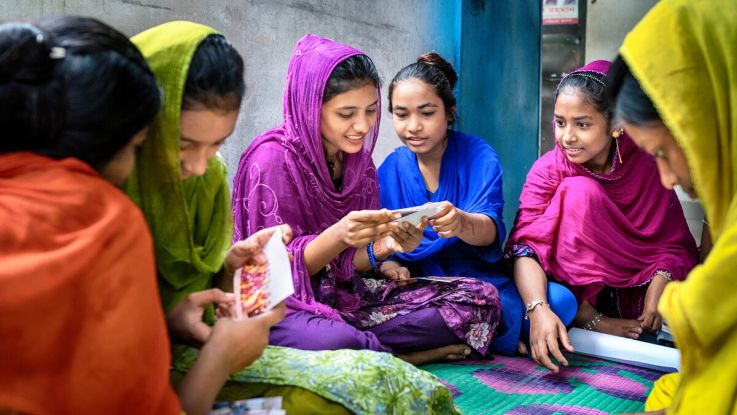
That means teaching girls to make and distribute reusable menstrual products that reduce both cost and waste, installing safe toilets and clean water facilities in schools so periods can be managed with dignity, and creating girls’ clubs and peer support spaces where young people can build confidence, share knowledge and stand up for their rights.
We also work with teachers, parents and communities to challenge harmful attitudes that keep women and girls trapped in silence.
How can I help girls demand period justice?
Period justice is about power, safety and equality and that’s the future we’re working towards.
Will you help women and girls working hard to demand period justice?
Yes, I'm with the girls!
Footnotes
- 1
ActionAid UK, YouGov survey, January 2026
- 2
https://www.actionaid.org.uk/latest-news/new-uk-period-poverty-poll-one-10-struggle-afford-period-products
- 3
https://www.worldbank.org/en/topic/water/brief/menstrual-health-and-hygiene
- 4
https://www.actionaid.org.uk/our-work/period-poverty/periods-all-your-questions-answered
- 5
https://openknowledge.worldbank.org/server/api/core/bitstreams/a92f6ee5-e932-4dcd-ac8d-aaeb319a72f7/content
- 6
https://pmc.ncbi.nlm.nih.gov/articles/PMC11113068/