Rape and sexual violence
150 million
The World Health Organisation estimates that 150 million girls are sexually assaulted every year.3
1/10
One in 10 girls under 20 (120 million) have been subjected to forced sexual intercourse or other forced sexual acts at some point in their lives.4
10 million
An estimated 10 million children are involved in child prostitution around the world.5
Rape as a form of violence of women and girls
Rape, like all forms of violence against women and girls, is a gross violation of human rights, is a result of deep gender inequality, and also perpetuates that inequality.
Due to its invasive sexual nature, rape is especially traumatising; it can cause deep physical, emotional and psychological trauma for years to come, it increases the risk of women and girls being infected with HIV, and it can have devastating effects on their family and community too.
Rape and sexual assault is an expression of some men and boys perceiving women’s bodies as objects that they can dominate and use. This perception is influenced and reinforced by the way that the female body and femininity is constucted by society and the law.
Patriarchal attitudes mean that women’s and girls’ bodies are less likely to be presented as being human. This denies women and girls their right to bodily integrity and means they are more vulnerable to abuse by those who benefit from patriarchy. The female body acts as a site where power is played out.
ActionAid provides rape survivors with counselling and practical support, and prepares communities with information on what to do to when someone is raped in order to seek justice. We also support communities in campaigning to end all forms of violence against women and girls. Read about our Theory of Change for tackling violence against women and girls.
Rape and sexual violence against children
UNICEF estimates that around 120 million girls worldwide (slightly more than 1 in 10) have experienced forced intercourse or other forced sexual acts at some point in their lives.7
Boys experience sexual violence too, but to a far lesser extent than girls, UNICEF studies show.8
By far the most common perpetrators of sexual violence against girls are intimate partners. In many countries, particularly in Sub-Saharan Africa, this is normalised and legitimised by child marriage – a socially accepted form of sexual violence, exploitation and abuse against girls. If the perpetrator had had sex with the girl prior to the ‘marriage’ taking place, it would be regarded as rape.
Experiences of sexual violence in childhood hinder all aspects of development: physical, psychological/emotional and social.
Apart from the physical injuries that can result, sexual abuse of children is associated with a wide array of mental health consequences and adverse behavioural outcomes in adulthood.9 The psychological impact can be severe due to the intense shame, secrecy and stigma that tend to accompany it.
It can lead to early pregnancy (in cases of rape) as well as greater risks of experiencing domestic violence by intimate partners.10
Rape and sexual assault of women and girls by non-intimate partners is also rife – such as by an uncle, neighbour, or stranger. In some areas where ActionAid works in Kenya, for example, girls as young as two years old have been raped, often by family members, with devastating consequences.
ActionAid supports local community groups to raise awareness about rape and sexual violence and prepare family members to know what to do.

Standing up to sexual violence
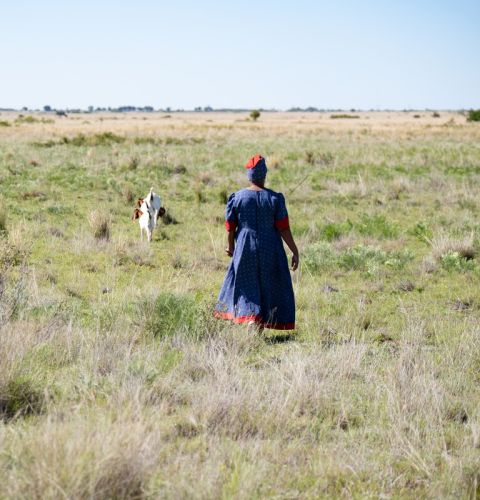
Mathlogonolo lives in Kuruman, a village in the Northern Cape of South Africa. She believes it is important that her daughter grows up in a safe environment. In her community, many women are experiencing gender-based violence. Mathlogonolo herself is a survivor of violence by one of the men who works in a mine near her village.
For many women, reporting sexual violence and transgressive behaviour is extremely difficult. Men working in the mines hold significant power, and the village is far from the nearest police station, meaning there is no quick access to protection or justice.
Together with WAMUA/MACUA, a local organisation supporting women in mining areas, and ActionAid, Mathlogonolo is helping to set up a community centre to provide support and shelter for women who have experienced violence.
I got a chance to gather women to stand up for themselves after such an event, so that it becomes easier for others to report. That is quite difficult and painful to do, but I am happy that I can help people from my own experiences.”
Mathlogonolo is helping women in her mining community stand up to gender-based violence and build a safer future for their daughters.
Lihlumelo Toyana / ActionAid

A respected person in Peundeuy village and Tamanjaya village, Cicih is often the point of contact for survivors of violence against women and children.
Bima Artoko/Indonesia
Responding to sexual violence in times of crisis
In the aftermath of repeated earthquakes and ongoing economic hardship in Pandeglang, Indonesia, community pressures and insecurity have increased the risks faced by women and children.
In this context, Cicih serves as secretary of the Village Consultative Body (BPD) in Tamanjaya village and is an active member of the Women-Led Community Based Protection (WLCBP) programme. She is often the first person survivors of violence turn to, for help.
Cicih supported a case involving two girls aged eight and six, who were abused by family members. The case was complex, with pressure from the extended family to protect the perpetrators.
Under Cicih’s coordination, the Tamanjaya Women’s Forum followed established procedures for handling violence against women and children, prioritising survivor safety and legal accountability. Despite threats and intimidation, Cicih continued her work, supported by evidence and formal legal processes.
Through her leadership, survivors received support and the case was formally pursued, highlighting the critical role of women leaders in responding to sexual violence during times of crisis.
Every day my mobile phone rings, especially when there is a threat to report me to the police for defamation. But I am not afraid because there is evidence of sexual violence and the testimonies of the survivors.”
Sexual violence in humanitarian crises
Violence against women and girls increases during all emergencies. Throughout all humanitarian crises, whether an earthquake, a drought or a conflict, many forms of violence against women and girls take place at an increased rate.
Displacement causes disruption and movement, and former systems which would have protected women may have broken down.
In the early phases of an emergency, sexual violence is the most common form of violence recorded. As the crises moves on, other forms of violence – such as domestic violence and child marriage – may also increase.
Rape as a weapon of war
In 2008, General Patrick Cammaert, a former deputy Force Commander of the United Nations Organisation Mission in the Democratic Republic of the Congo (MONUC) stated that:
It has probably become more dangerous to be a woman than a soldier in contemporary conflicts.”9
He said that the sexual violence he witnessed in Eastern Congo was among the worst atrocities he had ever seen in over thirty years of military service. Since 2008, humanitarian practitioners have started to understand that these human rights atrocities go beyond women – and affect the entire population.
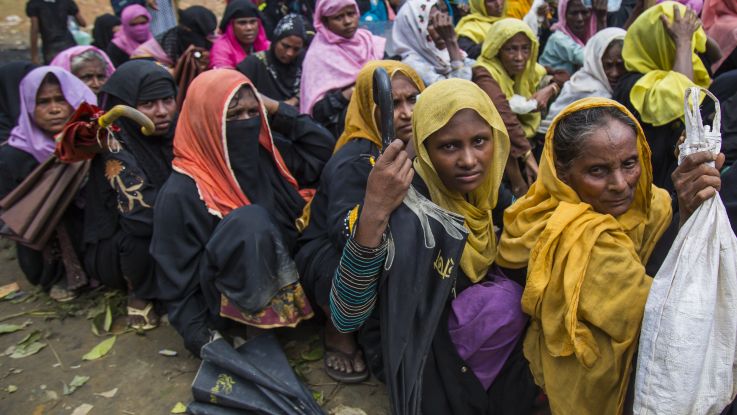
Throughout history, women and girls have been targeted with rape and sexual violence at the hands of military and rebel forces as a weapon of war – from the 1994 Rwandan genocide where between 250,000 and 500,000 women were raped10 to the current Rohingya refugee crisis where widespread rape of women and girls, and other atrocities, have forced hundreds of thousands of people to flee Myanmar.
Rape is used as a weapon of war to either wipe out, disperse or forcibly relocate people from a particular community or ethnic group. When used to forcibly impregnate women, it is akin to ethnic cleansing.
ActionAid helps survivors of sexual violence through setting up women’s safe spaces where women can share their experiences and access vital information, psychosocial support, and medical referrals if needed.
We train women in leadership skills so that they are better equipped to lead their communities — in times of crisis and beyond, and support them in their vital role in peace movements at grassroots levels.
Corrective rape
Corrective rape is a form of homophobic violence where men rape women in order to punish and 'cure' them of their lesbianism.
There is evidence of this form of violence occuring in countries such as South Africa, where in some cases an oppressive and mysoginistic culture has led to forced gender stereotypes, and a backlash of crimes against lesbian women, who are perceived as representing a direct and specific threat to the status quo.
A report by South Africa’s Human Rights Commission expressed alarm at the “growing phenomenon of ‘corrective’ rape” in schools across the country, with young boys believing that lesbian girls need to be raped in order to ‘correct’ their sexual orientation.9
This brutal form of violence is often racialised. Research has shown that while 44% of white lesbians from South Africa's Western Cape lived in fear of sexual assault, 86% of their black counterparts felt the same.10
Together with partner organisations in South Africa and around the world, ActionAid works to an end to corrective rape, support survivors and pressure governments to hold the perpetrators of violence to justice.

Rape as a weapon of war
Mebrhit, 45, is a mother of four living as an internally displaced person in Mekelle, Northern Ethiopia.
Formerly a restaurant owner in Afar, her life changed during the conflict between the federal government and Tigray.
While fleeing on foot with her children, she survived sexual violence by armed soldiers and witnessed extreme brutality.
Now widowed and living in rented accommodation, Mebrhit supports her family through low-paid labour while her children attend school. Living with HIV and receiving ART, she remains determined to survive. With ActionAid Ethiopia’s support, she plans to start a small business, hoping to rebuild her life and secure a better future for her children.
I want to live for my children and see them in a better situation hence I must take care of myself.’’
Sexual violence during conflict forced Mebrhit into displacement, but with support she is rebuilding her life for her children.
Hailu Nurga/ActionAid
Have you been affected by rape?
If you or anyone you know has experienced rape, there are services that can help. You don't have to report the assault to the police if you don't want to.
These services may be able to help you:
Rape Crisis – 0808 802 9999
A free national helpline for women and girls who have experienced abuse, rape and all forms of sexual violence.
24-hour National Domestic Violence Helpline - 0808 2000 247
A 24-hour national service for women experiencing domestic violence, as well as for their their family, friends, colleagues and others calling on their behalf.
Galop, the LGBT+ anti-violence charity
Support for LGTB+ women, men and non-binary people who have experienced hate crime, sexual violence or domestic abuse. They also have a dedicated service for trans people.
The Survivors Trust
Support for all survivors of rape, sexual violence and childhood sexual abuse, no matter how long ago it happened.
Childline - 0800 1111
Free help and advice to anyone under the age of 19.
Footnotes
- 1United Nations (2008). Unite to End Violence Against Women and Girls, Fact Sheet, p.1.
- 2United Nations Office for the Coordination of Humanitarian Affairs, United Nations High Commissioner for Refugees and International Rescue Committee (2012). Gender-Based Violence Classification Tool. 1st ed. [ebook] Gender-based Violence Information Management System Project.
- 3UNICEF (2006), Rights of the child, p.10.
- 4UNICEF (2014), Hidden in Plain Sight, A statistical analysis of violence against children, p.4.
- 5Centers for Disease Control and Prevention (2002), Child prostitution: global health burden, research needs, and interventions.
- 6ActionAid UK (2017), Common Cause, Collaborative Response: Violence against women and girls and sexual and reproductive health and rights, p.7.
- 9“Report of the Public Hearing on School-based violence” (2008), South African human rights commission P9
- 10“Levels of Empowerment Among LGBT People in the Western Cape, South Africa”, (2006) Triangle Project & UCAP, P30
Page updated 8 October 2026