The problems with FGM explained
Why is FGM so bad?
The procedure can cause serious bleeding, infection, infertility and even death. And it has severe physical, psychological, and social consequences for the rest of the girls' lives – it can cause complications and pain during pregnancy and childbirth; pain during sex; difficulties urinating or menstruating; incontinence; psychological problems and trauma.
The practice is not only life-threatening but also has severe implications for girls’ futures. After being cut, many girls never return to school, are forced into early marriage and endure years of distress.
Refusing FGM can also have severe social repercussions, including being rejected by one’s family, being outcast, or being denied the right to speak in public.
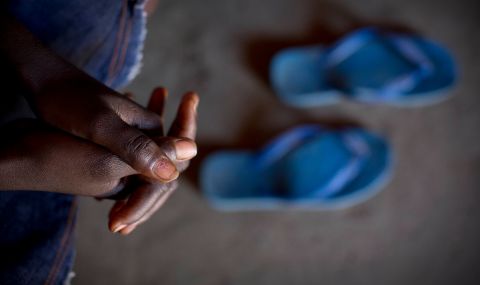
Rosaleen, 16, had FGM and was then made to drop out of school to marry an elder man. After the trauma of being cut she realised she didn't want to marry, and sought help from a women's network supported by ActionAid.
What are the physical effects of FGM on girls?
Immediate effects include:
- shock
- haemorrhage (bleeding)
- bacterial infections
- urine retention
- open sores
- injury to the nearby genital tissue
- death
Long term effects include:
- bladder and urinary tract infections
- cysts
- infertility
- greater risk of complications when giving birth
- higher risk of infant deaths during labour
FGM also increases the chance of girls needing further operations in the future. For example, for a girl who has had her vaginal opening sealed or narrowed (type III, known as infibulation - see above), she will need this to be cut open later to allow for sexual intercourse and childbirth. Sometimes a woman’s vagina will be cut open and stitched closed again several times, meaning she goes through the pain again and again, and is continually at risk.
There are three sorrows of womanhood. The first is when a girl has her genitalia cut... the second is when she is married and has to have her vagina opened... the third is when she gives birth.”
What are the psychological effects of FGM?
Girls who undergo FGM can endure terrible psychological distress; the procedure is so traumatic that they often suffer from extreme fear and anxiety for years to come.
It is often performed with an unclean razor blade, whilst squatting on a stone, outside, in front of the community. The procedure may mean she is denied sexual pleasure throughout her life, or endures excrutiating pain during sex. In many communities, girls are forced to drop out of school after being cut, and forced into early marriage.
This means:
- They’re unlikely to learn the skills they need to support themselves
- They won’t have the chance to learn about their rights
- They won’t have any choice about their future.
Instead, they may be trapped in an arranged marriage, fearful of the extreme pain they’ll have to go through the next time their husband wants to have sex, or when they give birth.
Why can’t girls just say ‘no’ to FGM?
Although FGM is recognised internationally as a violation of human rights, and is illegal in many countries, girls often aren’t aware of their rights, and/or do not know the practice is illegal.
In many communities, FGM is considered an important rite of passage into womanhood: girls may be outcast socially if they refuse, including being unable to marry.
In some communities in Uganda, a woman who hasn’t undergone FGM is not allowed to get food from the store, collect water, or even speak in public. In order to avoid FGM, she may have to escape from her family and community.

Empowering women and challenging harmful practices: Anastacia’s work in Baringo, Kenya
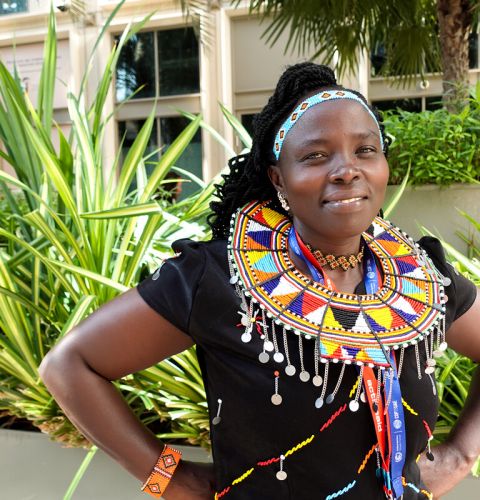
Anastacia Plilan is a climate champion and women’s rights advocate living in Tangulbei, Baringo County, Kenya.
She serves as an agent for both the Village Savings and Loans Association (VSLA) and Women-Led Community-Based Protection (WLCBP), supporting women in her community to overcome social and economic challenges.
Through her work, Anastacia trains women in energy-saving techniques, agroecology, and poultry keeping, helping them build alternative livelihoods and food security. She also guides women on their rights, providing a safe space to discuss challenges such as gender-based violence, economic vulnerability, and harmful practices like FGM.
Anastacia brings her experience and leadership to broader forums, sharing insights at COP28 on how local women’s groups can strengthen resilience to climate change while addressing social injustices. Her work demonstrates how empowering women with skills, knowledge, and collective support transforms communities and challenges harmful norms.
Anastacia Plilan trains women in Baringo on agroecology, alternative livelihoods, and rights advocacy.
Jess Midwinter / ActionAid
How to seek help
If you think you, or someone you know, are at risk of FGM, please seek support as soon as possible.
Page updated 28 August 2026