Periods in humanitarian disasters
In humanitarian disasters across the world, women, girls and people who menstruate tell us that amongst the items that they need the most are menstrual products, wipes and soap, so that they can manage their periods safely and with dignity.
That's why we provide kits containing these items in our humanitarian response work, alongside other essentials like food, water and shelter. Periods don't stop in a crisis.
Why menstrual products are a priority in a disaster
Conflicts and disasters can leave women, girls and people who menstruate without access to clean and safe menstrual products.
This can be due to the lack of availability of these products, or the lack of funds to buy them. As a result, many are forced to use improvised methods to manage their periods, including torn pieces of clothing, rags, dirty rugs or sitting on old tin cans.
These alternative methods are often ineffective, uncomfortable and unhygienic. They can lead to dangerous infections as well as blood stains, which can cause feelings of embarrassment and isolation.
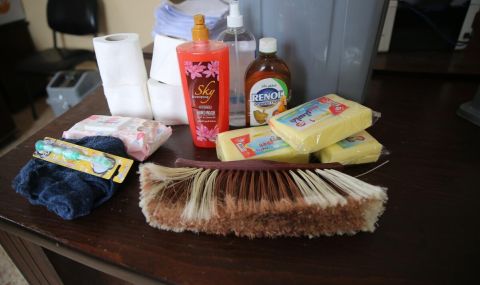
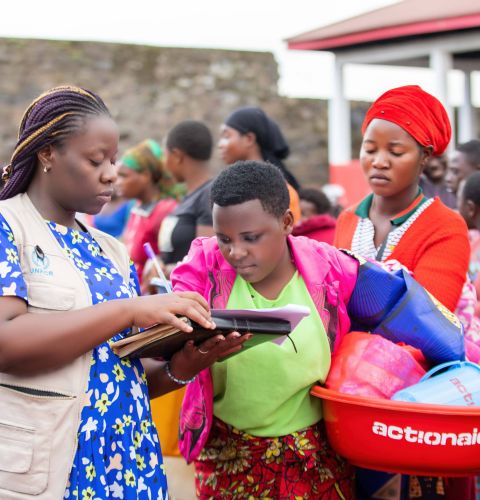
Wefaq Association – a women-led non-governmental organisation in Gaza and partner of ActionAid, distribute hygiene kits to women and girls .
Putting menstrual health at the heart of emergency response
Women and girls are particularly vulnerable in emergencies, disasters and conflict zones.
ActionAid ensures that women are at the heart of our emergency response work, because they are amongst the first reponders to a crisis, and bring vital skills, resources and experience.
Because our emergency work is led by women, they ensure that the needs of women refugees and other vulnerable groups are met. That is why ActionAid recognises that access to clean and safe menstrual products is not a ‘nice-to-have’.

Managing periods during displacement
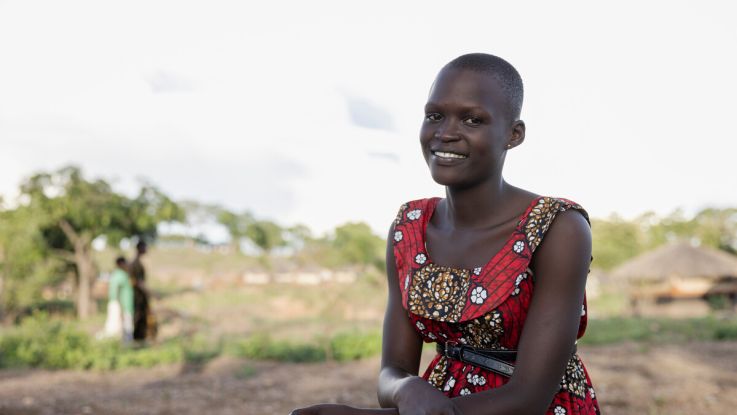
Maria, 16, is a South Sudanese refugee living in Kiryandongo refugee settlement, where she has lived for the past four years. She had her first period at 15. “My mother gave me pads and told me about periods,” she recalls.
Since then, Maria has attended menstrual health workshops led by Razia, where she learned how to make reusable sanitary pads. Through the sessions, she also gained knowledge about early marriage, teenage pregnancy, and girls’ rights.
Making her own pads has eased financial pressure. “Now I can save money,” she says. Maria also makes pads for friends who cannot afford them and shares what she has learned.
Sometimes they don’t have money to buy pads, so I help them.”
Today, Maria says she has enough pads each month and no longer worries about missing school. The confidence she gained through the workshops has transformed her leadership, she is now Head Girl at her school, supporting other girls to manage their periods with dignity and stay in education.
Maria (16), is a South Sudanese refugee living in Kiryandongo refugee settlement., Uganda.
Esther Mbabazi / ActionAid
How ActionAid distributes menstrual products in an emergency
We have distributed menstrual products in crises and disasters as wide-ranging as the Nepal earthquakes of 2015, in Greece at the height of the refugee crisis in 2015-2016, in Haiti after Hurricane Matthew in 2016, East Africa during the food crisis of 2017 and during the Gaza crisis in 2023-2025.
They are often distributed at our Women Friendly Spaces, which we set up in the aftermath of disasters to provide a safe space for refugee women and girls who may be at risk of violence.
Page updated 17 August 2026